As working from home becomes a permanent fixture for many households, the humble home office is no longer an afterthought but a space people want to enjoy spending time in. According to interior designers and paint specialists, the colours chosen for these rooms can play a significant role in how focused, calm or motivated someone feels while working.
Eloise Pfeiffer, interior designer at Pfeiffer Design, says green is one of the most versatile shades for a home office. "For a space in the home which needs to feel both calm and productive, the colour green is one of the most versatile and emotionally resonant colours you can introduce to a home office," she said. "From olive to forest green and sage, green has the power to help a space feel grounded yet fresh, relaxing and confident." She added that green suits contemporary biophilic and wellness-led design trends expected to continue through 2026.
Ruth Mottershead, creative director at Little Greene, agreed that greens and earthy neutrals suit workspaces. "Greens and earthy neutrals are wonderful choices for a workspace as they connect us with the natural world, helping to create a sense of calm and tranquillity, while cooler tones such as soft blues and greens can encourage focus and concentration," she said.
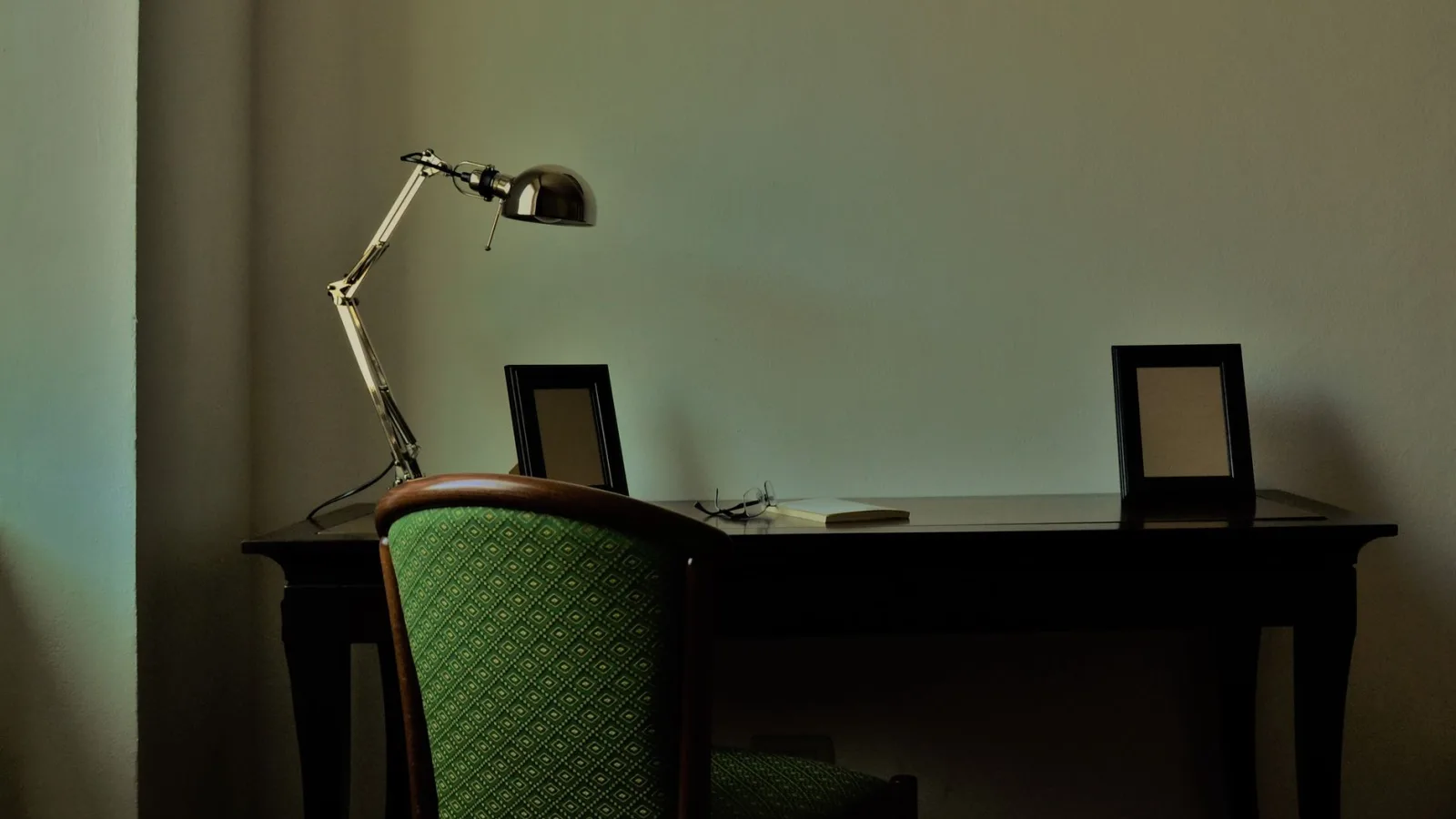
Specific shades recommended include soft sage greens for a soothing, wipeable and washable backdrop, and deeper forest greens for a cocooning effect when paired with suitable lighting. Aqua tones, which combine blue and green, are also suggested as an energising and hardwearing option.
While calming tones are popular, the experts say bold colours are not off limits. Mottershead said vibrant shades can bring "a sense of optimism, energy and creativity" to a workspace, arguing that carefully chosen brighter colours can lift mood rather than distract from work, which she said is particularly relevant for those spending long periods working from home.
Cathryn Sanders, head of creative at Earthborn, urged some restraint when using strong colours. "Bright colours can work, but they are often better used in smaller amounts," she said. "A strong yellow or red across every wall may feel too distracting in a room where you need to concentrate. Instead, use brighter shades on a shelf, cupboard door, desk area or pinboard wall to add energy without taking over the whole room."
For smaller home offices, Sanders recommends lighter shades to maximise available light. "Warm off-whites can make a compact room feel cleaner and more open, especially when used on both walls and woodwork," she said, citing Earthborn's White Clay and Up Up Away as examples. She also suggested painting the ceiling in the same or a slightly lighter shade to reduce visual breaks and make a room feel less enclosed.
For those without a dedicated room, colour can be used to zone a home office within a larger space such as a bedroom or living room. Mottershead said a contrasting or tonal shade applied to an alcove or defined area can "subtly zone a home office and give it its own identity, without the need for physical divides", while still keeping the space feeling connected to the rest of the room.
Sanders offered similar advice for open-plan spaces, suggesting that painting a wall behind a desk or a section of shelving in a different colour can mark out a work zone without adding furniture or partitions. She recommended muted greens, soft blues or warm neutrals for this purpose.
On paint finish, both experts stressed practicality alongside appearance. "An ultra matt finish can help soften light and reduce glare, which is useful if you spend a lot of time looking at a screen," said Sanders, though she noted that high-touch areas such as desks, shelves and cupboard doors may benefit from a more durable finish.
Mottershead agreed that hardwearing finishes are important in a room that needs to withstand daily use. She pointed to products such as Little Greene's Intelligent Matt Emulsion, which she said "retains a beautiful soft, flat appearance, but offers the added benefit of being wipeable and hardwearing," making it easier to clean marks, scuffs and fingerprints from walls near furniture, books or files.
Wallpaper was also raised as an option for adding character to a home office. Mottershead said botanical and floral patterns in particular can bring "a fresh, uplifting feel" to the room, transforming a blank space into a more inspiring one. Sanders added that, for those choosing colour more generally, soft blues, blue-greens and muted greens tend to support concentration without making a room feel too busy or too plain.
Overall, the experts suggest that colour choice in a home office should balance personal taste with practical considerations such as room size, lighting and how the space will be used, whether that is a standalone room, a converted garden building or a corner of a shared living space.