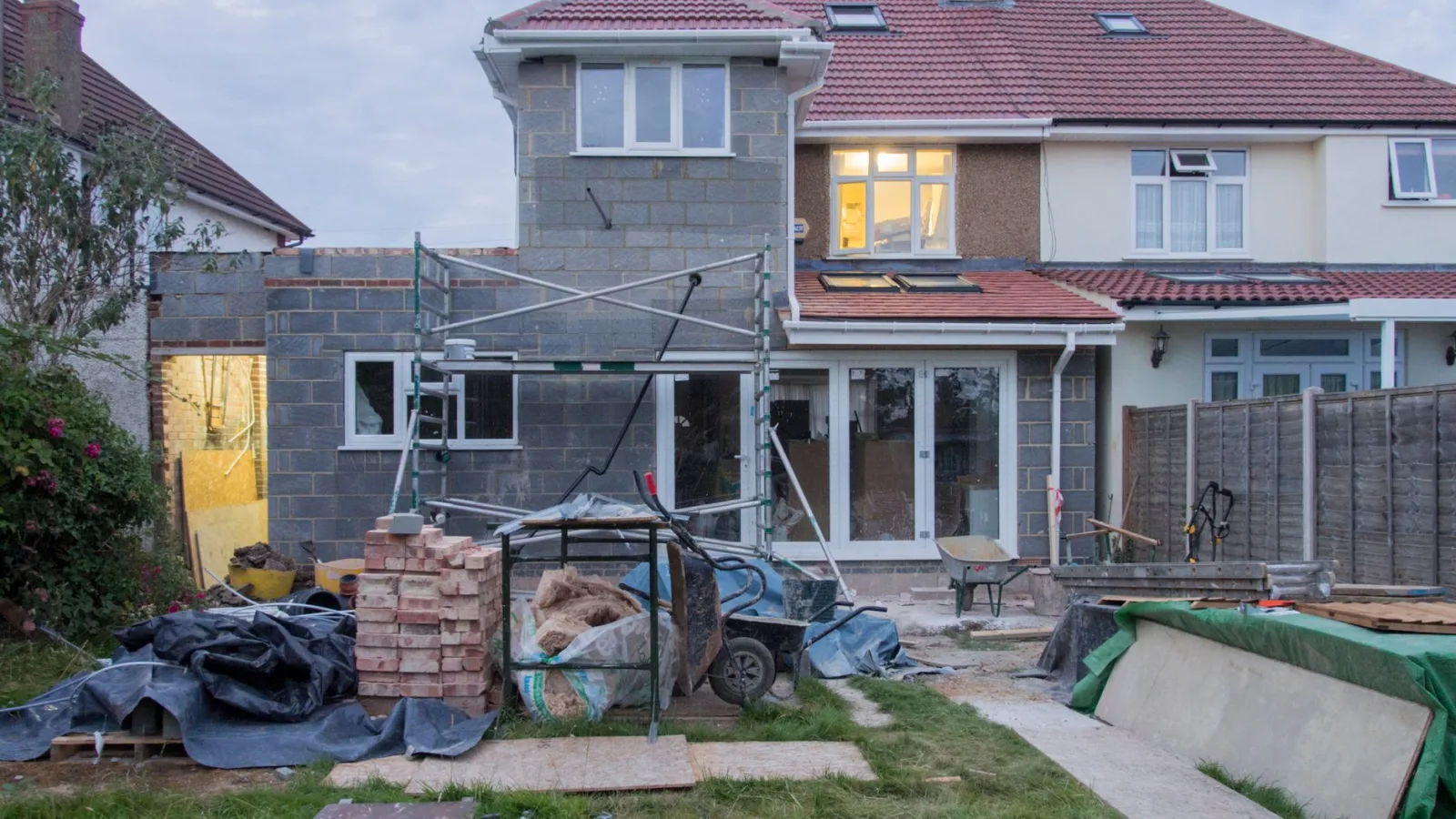

For many homeowners embarking on a self-build project or a significant extension, the tendering stage marks the moment their vision begins to materialise. It is also often when a sense of apprehension can set in, as abstract budgets and design sketches translate into firm costs from prospective builders.
Tim Phillips, an experienced senior quantity surveyor, explains the critical role of the tendering process in any construction project. "This is where builders provide firm costs based on your finalised plans," Mr Phillips states, highlighting its importance for effective cost control.
At its core, tendering is a systematic method of inviting builders to submit quotations for a project using a consistent set of information. Homeowners provide designs, specifications, and electronic data to multiple qualified builders, requesting official quotes rather than relying on verbal estimates. This approach facilitates a 'like-for-like' comparison, levelling the playing field for all bidders.
Beyond simply finding the cheapest builder, tendering serves as a vital risk management tool. It assists in identifying a builder who not only offers a reasonable price but also demonstrates a clear understanding of the project's scope, thereby reducing the likelihood of costly disputes once work commences.
When is a Formal Tender Recommended?
A formal tendering process is generally recommended for any project characterised by high risk, complexity, or significant cost. This encompasses the majority of self-builds, house extensions, and major renovations, particularly when structural changes are involved, various trades need scheduling, or the overall build programme extends over several months.
The Principle of Consistency
Consistency stands as the most crucial principle throughout the tendering phase. The validity of comparing multiple quotes hinges entirely on each builder pricing the exact same information. If one builder works from planning drawings, another from building regulations drawings, and a third from a sketch, the resulting quotes will vary dramatically and offer little meaningful comparison.
"In such a scenario, you are evaluating each builder's interpretation of missing details rather than the market itself," Mr Phillips explains. "This frequently leads to an initial low figure that inevitably changes once construction is underway."
Tendering is key to obtaining accurate cost information when a clear concept is in place and the cost needs to be known before commitment. It is particularly beneficial for those securing loans or stage payment mortgages, working within a specific budget, or personally managing the project.
When Less Formal Approaches May Suffice
For smaller projects, such as simple repairs or minimal alterations, a full tendering process may not be necessary. Similarly, negotiated tendering can be effective if a homeowner has an established relationship with a builder who has successfully completed comparable work. However, even in these cases, the project details must remain clear and thoroughly documented.
The trade-off with a less formal approach is a reduced ability to compare prices, necessitating precisely stated scope and specifications to control risk.
Common Pitfalls to Avoid
Tim Phillips highlights several common errors that can undermine the tendering process:
- Tendering too soon: Homeowners often rush to test the market while plans are still under development. Pricing without sufficient information rarely yields meaningful results, as builders will make their own assumptions if dimensions are missing, structural details are unclear, or final specifications are undefined. These assumptions are unlikely to align, leading to false confidence and low quotations based on deficiencies, which later emerge as costly variations during contract administration.
- Inconsistent information: Providing different builders with varying information or offering informal answers to questions without sharing the results with all parties destroys the level playing field and renders price comparison unreliable.
- Solely basing decisions on the lowest price: A significantly lower quotation can often signal under-pricing, omissions, or a misunderstanding of the project's scope. This can lead to corner-cutting, repeated claims for variations, or strained relationships throughout the build.
- Underestimating documentation: Undefined responsibilities, verbal agreements, and deferred decisions ("we'll sort that out later") frequently escalate into disputes. "More time, money, and worry are typically saved during the build process when information is established prior to the tender," Mr Phillips advises.
What Information to Provide
The quality of the prices received directly correlates with the level of detail provided in the tender package. The design should be sufficiently developed for a builder to fully comprehend what is to be built, how it will be constructed, and to what specification.
Essential documentation includes:
- Detailed design drawings: These must incorporate plans, elevations, and sections, reflecting the current design rather than preliminary planning versions.
- Structural requirements: Clear details on steelwork, foundations, lintels, floor build-ups, and any specialised features like retaining walls.
- Written specifications: Outlining standards for materials, finishes, and workmanship. This should cover aspects such as external wall construction, insulation values, windows and doors, roofing products, interior finishes, sanitaryware criteria, and woodwork quality. Without this, builders will use their own judgement, often defaulting to basic or mid-range products.
- Defined responsibilities: Explicitly state who is supplying elements like kitchen appliances, flooring, light fixtures, or custom installations. Clarify requirements for preliminary tasks such as scaffolding, temporary protection, waste removal, site welfare, and making good.
It is crucial to minimise ambiguous items or 'to be confirmed' notes. Excessive provisional sums or vague descriptions weaken the tender and transfer cost risk back to the homeowner. Key choices that genuinely cannot be finalised should be clearly defined and limited, rather than left open-ended. "Clarity, not perfection, is the aim, but the more detailed the project, the more accurate the quotations will be," notes Mr Phillips.
Managing the Tendering Process
For most residential projects, inviting three to four builders to submit quotations is optimal. Fewer than three restricts comparative scope, while more than four can lead to lower-quality responses as builders perceive limited chances of success.
The focus should be on suitability. Select builders with demonstrated expertise in projects of comparable scope and style. A builder primarily focused on new builds, for example, might not be the best fit for a complex extension to an existing home. Verify their ability to meet the agreed programme and ensure their financial standing appears secure.
The process itself requires structure:
- Provide each builder with the identical tender package simultaneously, alongside a fixed return date.
- Allow a realistic timeframe for quoting, typically three to four weeks for an extension or renovation, and longer for a new build.
- Encourage site visits for builders to assess site access, restrictions, and current conditions.
- Formalise answers to all questions during the tender period and share responses with all tenderers to maintain consistency and fairness.
- Inform unsuccessful bidders of the outcome, as a professional approach fosters positive participation for future projects.
Analysing Tender Returns
When quotes are returned, resist the urge to immediately focus on the bottom line. "Knowing how the quantity was calculated and what lies behind it is what really matters," Mr Phillips advises.
Key areas for scrutiny include:
- Scope coverage and exclusions: Verify that each builder has quoted for the entire project scope. Examine exclusions thoroughly; common omissions include floor finishes, kitchen supplies, decoration, external work, and building control fees. Exclusions are not inherently problematic but must be clear and comparable across all tenders.
- PC Sums (Prime Cost) and Provisional Sums: These are temporary allowances for elements not fully specified. Excessive or large allowances undermine cost certainty and can lead to future increases in the contract sum. Scrutinise permitted levels for items like bathrooms, kitchens, and finishes, as a lower total quote might simply reflect fewer allowances.
- Red flags: A notably lower tender should be seen as a red flag, potentially indicating a mistake, omission, or misinterpretation. Always document significant discrepancies and request a clear explanation. Be wary of ambiguous explanations, omitted details, or a reluctance to answer enquiries.
Ultimately, the objective is to secure a quotation that is accurate, transparent, and consistent with project documentation, rather than simply the lowest amount.
Avoiding Issues During the Tender Phase
Even with excellent drawings and multiple competitive bids, the tender process can falter if not managed correctly. Frequent problems include:
- Scope creep: Homeowners often continue to refine specifications or designs while builders are preparing quotes. Minor, informal changes can invalidate previous pricing assumptions and lead to inconsistent returns. The solution is to freeze the design before releasing the tender and manage any necessary modifications with a formally issued addendum to all bidders.
- Poor communication: Verbal explanations during site visits that are not documented in writing create ambiguity. Builders will price based on their understanding, and discrepancies will only emerge later. All instructions, clarifications, and updated information should be distributed to every builder.
- Time pressure: An insufficient timeframe for pricing encourages speculative 'gut feelings' and large provisional sums. Builders under pressure may overlook details that could lead to future claims or inflate prices with risk allowances. A reasonable tender period enhances accuracy.
- Failure to verify credentials: Competitive tendering does not replace proper due diligence. Before inviting a site visit, confirm a builder's insurance, current references, and experience with similar projects.
- Post-appointment changes: Drastically altering the scope after a builder has been appointed compromises the integrity of the process. Significant changes may necessitate requesting updated rates to maintain transparency.
"A methodical approach during the tender stage lays the foundation for a more seamless build process," Mr Phillips affirms.
The Value of Expert Advice
While homeowners can prepare a tender package themselves, expert advice often proves invaluable. Structured and clear information leads to more credible quotations.
An architect or architectural technician typically creates the drawings and may also draft the specification. They can resolve issues, coordinate structural information, and ensure the design is fully developed before tendering.
An additional layer of control is provided by a quantity surveyor (QS). Mr Phillips, through his company Quantiv.uk, offers an Early Cost Advice (ECA) service from £295, assessing affordability before quotes are requested, without needing a site visit, using just the design information.
A QS can also develop a structured document like a Bill of Quantities (BQ), which Mr Phillips offers from £995. A BQ is described as an "essential document to acquire more tender returns from builders." He states that sending out a BQ with tender information typically yields at least four tender returns from five builders, compared to only one or two without. The BQ serves as a control document, enabling 'like-for-like' comparison of returns, and can be incorporated into the contract as an agreed sum and used for valuation purposes.
"If you overpay and they become insolvent then you’re paying twice, as you’ll need to engage a new builder to pick up the works," Mr Phillips warns, highlighting how a BQ assists in paying builders the correct amount for work completed.
Fees for tendering and cost analysis services vary by project size and location, ranging from a few thousand pounds to a small percentage of the contract value for a typical extension or renovation. "Even if this is an initial cost, it is small in comparison to the financial risk of a six-figure building contract," Mr Phillips explains. "At this point, expert advice is meant to control costs rather than increase them."
Post-Tender Steps
The process does not conclude once tenders are returned and examined. The next crucial step is clarification. This involves a thorough examination of each submission, either by the homeowner or their quantity surveyor, to ask formal questions. Written confirmation is required for any variances, exclusions, provisional sums, and programme queries.
Clarification meetings, typically with one or two selected builders, are more than just cost negotiations. They serve to discuss site logistics, verify programmes, assess the builder's comprehension of the project, and evaluate their communication style. "At this point, a builder’s demeanour and level of professionalism frequently reveal how the project will develop on site," Mr Phillips observes.
If changes are agreed upon, such as adjusting provisional sums or rectifying omissions, the builder should submit a new tender. This ensures the final contract bid accurately reflects a clear and mutually understood scope.
Before any work commences, the agreement must be formalised in a written building contract, such as those from the Joint Contracts Tribunal (JCT). This document clearly outlines the contract sum, payment process, start and end dates, methods for managing variations, and dispute resolution procedures. For most domestic projects, a standard form of contract is preferable to an informal letter of intent or email exchange. Work should only begin once the contract has been signed and all insurance details verified.
Concluding the tender process in an organised manner benefits both parties by establishing clarity and a professional framework for the entire building project.
Tim Phillips is an experienced senior quantity surveyor and estimator with over 38 years in the construction industry. He has managed diverse projects for corporate, public, and private residential clients, from small budgets to multi-million pound schemes. For the past 18 years, he has worked freelance through his company www.quantiv.uk and is a speaker at the Homebuilding & Renovating Shows.