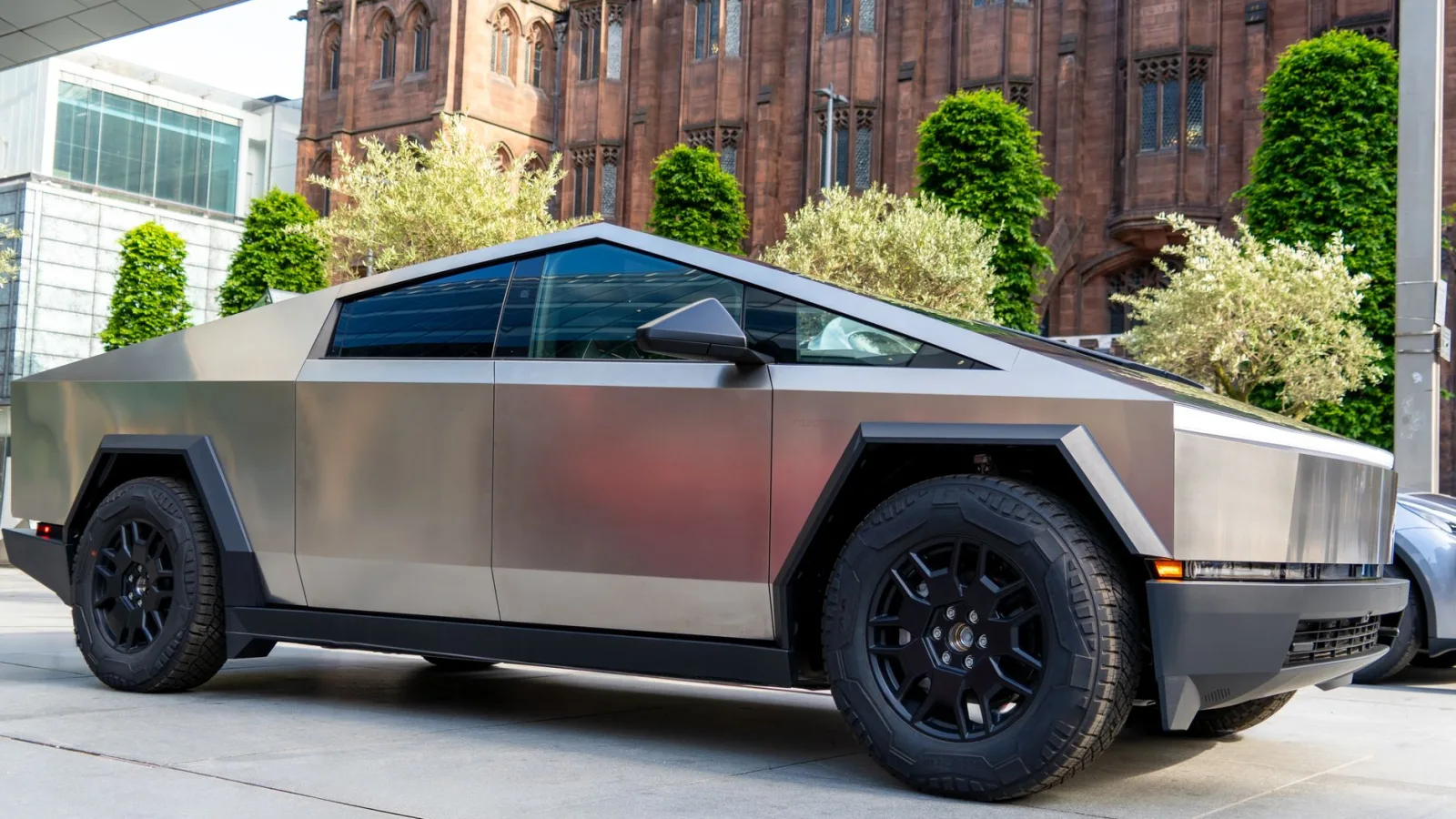
Tesla has begun offering public rides in its Cybercab robotaxi in Austin, marking the first time members of the public have been able to hail the driverless, two-door vehicle through the company's Robotaxi app.
The addition was announced at an invite-only event in downtown Austin on Thursday by Ashok Elluswamy, Tesla's vice-president of AI. "You can go outside, take rides," he told attendees at the close of the keynote. "Anyone can take rides. It's open to the entire public."
Until now, Tesla's robotaxi service in Austin had relied solely on modified Model Y vehicles. The Cybercab is a purpose-built robotaxi designed to carry two passengers and, unlike the Model Y, is built without a steering wheel or pedals, placing it in similar territory to Amazon's Zoox autonomous vehicle.
Tesla has not disclosed the size of the public Cybercab fleet. However, records from the Texas Department of Motor Vehicles show the company had registered 45 Cybercabs in the state as of Thursday.
Video footage shared online by autonomous-vehicle content creators who attended the Austin event showed how the vehicle operates in practice. In one clip posted by creator David Moss, riders were able to unlock the Cybercab's butterfly doors through the Robotaxi app before the doors closed automatically once passengers were seated.
The public launch comes almost two years after Tesla first unveiled the Cybercab at its "We, Robot" event in Burbank, California, in October 2023. Tesla chief executive Elon Musk has repeatedly presented the vehicle as the company's answer to a low-cost robotaxi capable of being manufactured at scale, previously stating that it would cost under $30,000.
Alongside the robotaxi service, Tesla is also pursuing plans to sell Cybercabs directly to consumers while continuing to operate some of them within its ride-hailing fleet. Ahead of Thursday's event, the company launched an online interest form allowing members of the public to register interest in what it described as "Cybercab fleet vehicle purchasing."
However, Tesla is likely to face regulatory obstacles before it can bring the vehicle to the wider consumer market. There is no blanket federal prohibition on vehicles built without a steering wheel or pedals, but manufacturers must certify that such vehicles meet applicable federal motor vehicle safety standards, or apply for temporary exemptions, before they can be sold to private buyers.
A Tesla spokesperson did not respond to a request for comment on the regulatory process or the scale of the fleet's expansion.
The move deepens Tesla's push into autonomous ride-hailing at a time when the company is competing with established robotaxi operators, including Alphabet's Waymo, as well as newer entrants such as Amazon's Zoox, both of which have already been testing or operating vehicles without traditional driving controls in US cities.
Tesla's robotaxi service in Austin has been operating on a limited basis since earlier this year, initially using safety monitors in modified Model Y vehicles before gradually expanding its operating area and rider access. The introduction of the Cybercab represents a significant step in the company's stated ambition to build a robotaxi network based on vehicles specifically engineered for autonomous operation, rather than adapted consumer cars.
Whether the Cybercab can be sold to individual buyers in the near term remains uncertain, given the certification requirements attached to vehicles lacking manual controls. Analysts have previously noted that securing exemptions or full compliance with federal safety standards can be a lengthy process, and Tesla has not set out a public timeline for when consumer sales might begin.
For now, the vehicle's rollout is confined to Tesla's ride-hailing network in Austin, with riders able to request Cybercab journeys through the same app used for the company's existing robotaxi service. Tesla has not said whether or when the Cybercab will be introduced to other US cities where it operates robotaxi trials.