Aston Martin's history has been marked by periods of financial difficulty alongside decades of producing some of the most admired grand tourers and sports cars in the industry. The British manufacturer's recent expansion into SUVs and road-going Le Mans-derived machinery has broadened its range considerably, but several models from across its history continue to define the brand's reputation.
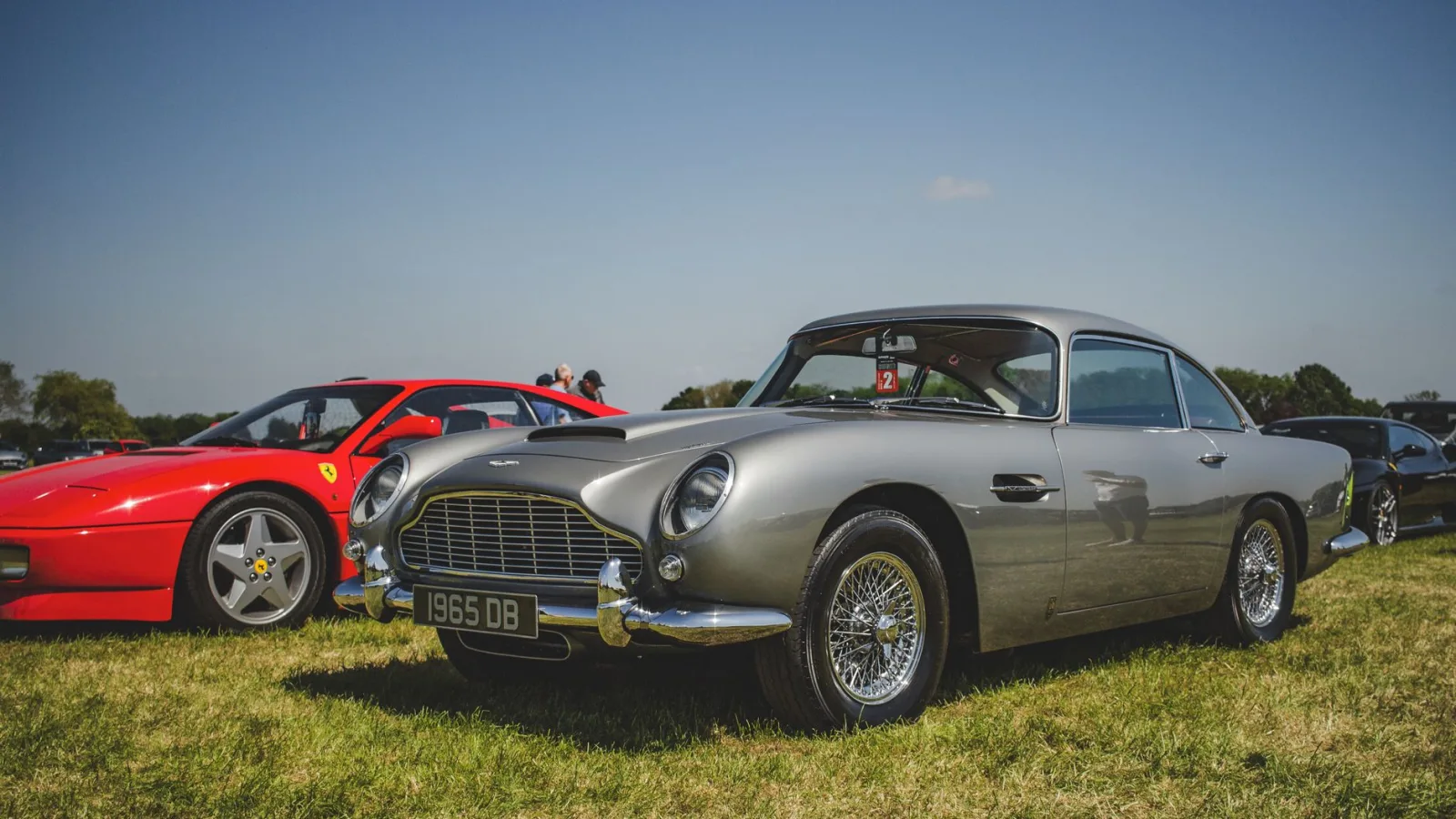
Among the most recognisable is the DB5, launched in the 1960s as a successor to the DB4. While its fame owes much to its appearances in James Bond films, the DB5 was also a capable grand tourer in its own right. It retained the largely unchanged Carrozzeria Touring bodywork of its predecessor but gained a larger 4.0-litre engine producing 282bhp, a five-speed gearbox, and disc brakes taken from the high-performance DB4 GT. Despite retaining a live rear axle, unlike the more sophisticated Jaguar E-Type of the same era, the DB5 remains usable in modern traffic and continues to be favoured by film productions, including more recent Bond instalments.
The 1986 V8 Zagato, built in collaboration with the Milanese coachbuilder, was a divisive design when new but has since become highly sought after by collectors, with prices now reaching upwards of £200,000. Only 52 coupes and 37 convertibles were produced. Based on the V8 Vantage, it used a 432bhp version of Aston Martin's 5.3-litre V8 engine, giving it a top speed of 186mph and 0-60mph acceleration in under five seconds, figures that placed it among the fastest production cars of its time.
The 1992 Vantage evolved from 1989's Virage, which had introduced a more rounded design while retaining the 5.3-litre V8 in a 330bhp configuration. Capable of 186mph, the Virage could also be upgraded via Aston Martin's Works Service to the more powerful V600 specification.
The DB7, unveiled at the 1993 Geneva Motor Show, is regarded as one of the most visually accomplished Aston Martins of recent decades. Designed by Ian Callum, it was originally conceived as a Jaguar model before cost pressures led to its development under the Aston Martin badge, with components shared from Mazda and Ford to help manage production costs. It became a strong seller for the brand and was later offered with a V12 engine option from 1999.
The Vanquish, introduced in 2001, marked a significant shift for Aston Martin with an entirely new aluminium structure, an automated manual transmission and a 5.9-litre V12 engine producing 460bhp. Previewed by the 1998 Project Vantage concept, the Vanquish influenced Aston Martin styling for the following 15 years.
The V8 Vantage of 2005 introduced a smaller, sports car-focused model with no direct predecessor, positioned to compete with rivals such as the Porsche 911. Its 4.3-litre V8 produced 380bhp, and a shorter, stiffer platform than the DB9 gave it notably sharper handling than earlier Aston Martin models.
The One-77, launched in 2009 during a period of global economic downturn, was priced at £1.2 million and limited to 77 examples, all of which sold. It used a bespoke carbonfibre monocoque structure and a 7.3-litre V12 engine developed by Cosworth, producing 750bhp and an estimated top speed of around 220mph.
The Valkyrie, developed in partnership with Red Bull Advanced Technologies, has competed at Le Mans and in the World Endurance Championship, reflecting its close relationship to motorsport. Powered by an 11,100rpm Cosworth V12 engine, it is priced at £2.3 million and designed with extensive aerodynamic elements more typical of a racing car than a road vehicle.
The DB11, introduced in 2016, represented a departure in styling from its predecessor the DB9 and later adopted a V8 engine option in 2017. Its successor, the DB12, launched in 2023 with an AMG-sourced twin-turbo V8 producing 671bhp at launch and 690bhp in the 2025 DB12 S variant, while the V12 engine was reserved for the third-generation Vanquish.
The Valhalla, Aston Martin's mid-engined supercar, had a prolonged development period after first appearing in concept form in 2019. It features a hybrid-assisted AMG V8 producing more than 1,000bhp and all-wheel drive, a configuration rarely used by Aston Martin outside its DBX SUV range.
Together, these models illustrate the range of engineering approaches and design philosophies Aston Martin has pursued across more than six decades, from classic front-engined grand tourers to modern hybrid supercars and motorsport-derived road cars.