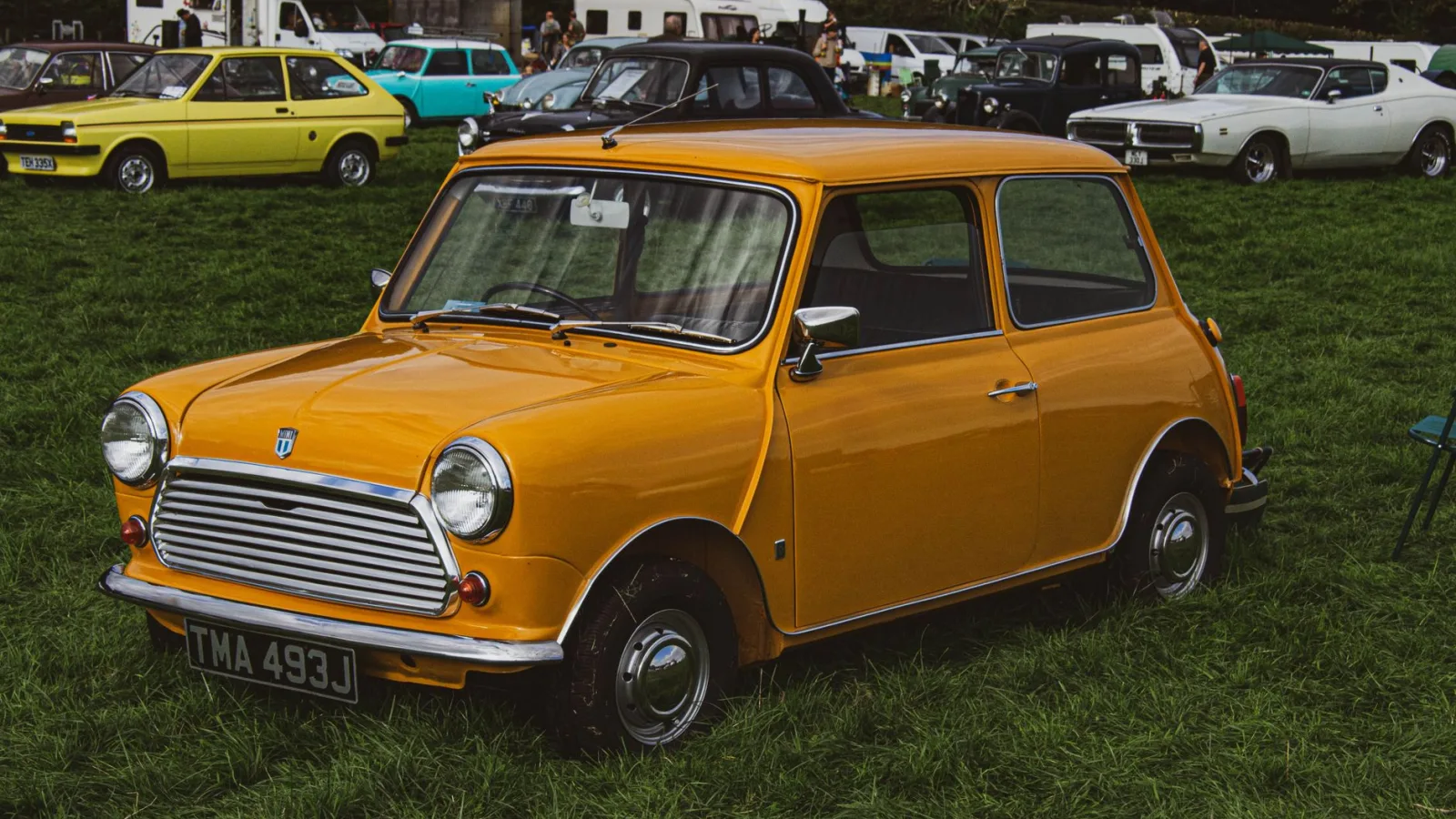
A British coachbuilder has turned the classic Mini into an open-sided beach car, stripping away doors, rear glass and lower body panels to create a low-volume model called the Mojito.
The revived Crayford Automobiles, reworking the classic Mini as the centrepiece of its current output, has built the Mojito as a short-hop coastal runabout rather than a vehicle intended for daily commuting or long motorway journeys. The company has been explicit that the car is designed for occasional, local use near the coast rather than as a practical everyday replacement.
The conversion removes the Mini's doors and rear glass along with its lower body panels, leaving a four-seat, hand-built car that is open at the sides. It retains its fixed roof and a standard folding Webasto-style sunroof, meaning it is not a fully convertible model but one that offers open-air motoring through its missing side panels instead.
Buyers can choose from four exterior finishes: White Sand, Beach Yellow, Surf Blue, or a bespoke Mojito colour. Inside, Crayford has fitted marine-grade upholstery and non-slip Flexiteek flooring in place of the Mini's standard carpet and vinyl trim, materials chosen to suit a car expected to spend time near sand and saltwater.
Despite the extensive bodywork changes, the Mojito keeps the compact footprint of the donor Mini, with its overall length and width remaining close to the classic city car's roughly 10-foot by 4.6-foot dimensions. Crayford and recent coverage of the model have described production as limited, though no fixed production cap has been confirmed.
Mechanically, the underlying Mini hardware has largely been left stock. The Mojito uses the original Mini engine, retuned for stronger low-end torque, paired with Mini Cooper-specification front disc brakes to help the car cope with modern traffic conditions. A manual gearbox is fitted as the default setup.
Some published specifications list a 998cc engine producing 40 horsepower, with an estimated kerb weight of around 650 kilograms (1,433lbs), though Crayford has noted that exact figures can vary depending on the donor car and the specific customer build. There is no formal factory options list for the Mojito; instead, Crayford treats each car as a low-volume, coachbuilt project, with upgrades agreed individually with buyers.
Pricing for the Mojito starts at £35,000 (around $46,200) in the UK for entry-level builds, a figure the company has described as an attempt to keep the car's base price "very attainable" before any bespoke requests are added. Because each Mojito is effectively a bespoke conversion, final costs can rise depending on the level of customisation a buyer requests.
Ordering and ownership arrangements reflect the car's intended role as an occasional holiday vehicle rather than a conventional production model. Buyers deal directly with Crayford, which delivers a fully converted classic Mini rather than supplying a kit or working through a dealer network.
UK-market cars can qualify for the donor Mini's historic vehicle status for tax and inspection purposes, offering potential savings for domestic buyers. Export buyers, however, will need to confirm registration and import requirements with their own national authorities, as classic-car rules vary significantly between countries and will determine whether a converted Mojito can be legally registered and used outside the UK.
The Mojito's approach mirrors a broader trend among small-scale coachbuilders currently reworking older platforms for niche buyers. Recent coverage has highlighted similar projects, including a Fiat 500 restomod built in Britain, with both efforts betting that compact, characterful base cars still have scope for an entirely new identity when extensively reworked by specialist builders.
For now, the Mojito remains a limited-production model aimed squarely at buyers seeking a distinctive, low-key car for short coastal outings, with Crayford positioning it as a characterful alternative to mainstream convertibles rather than a direct competitor to them.