
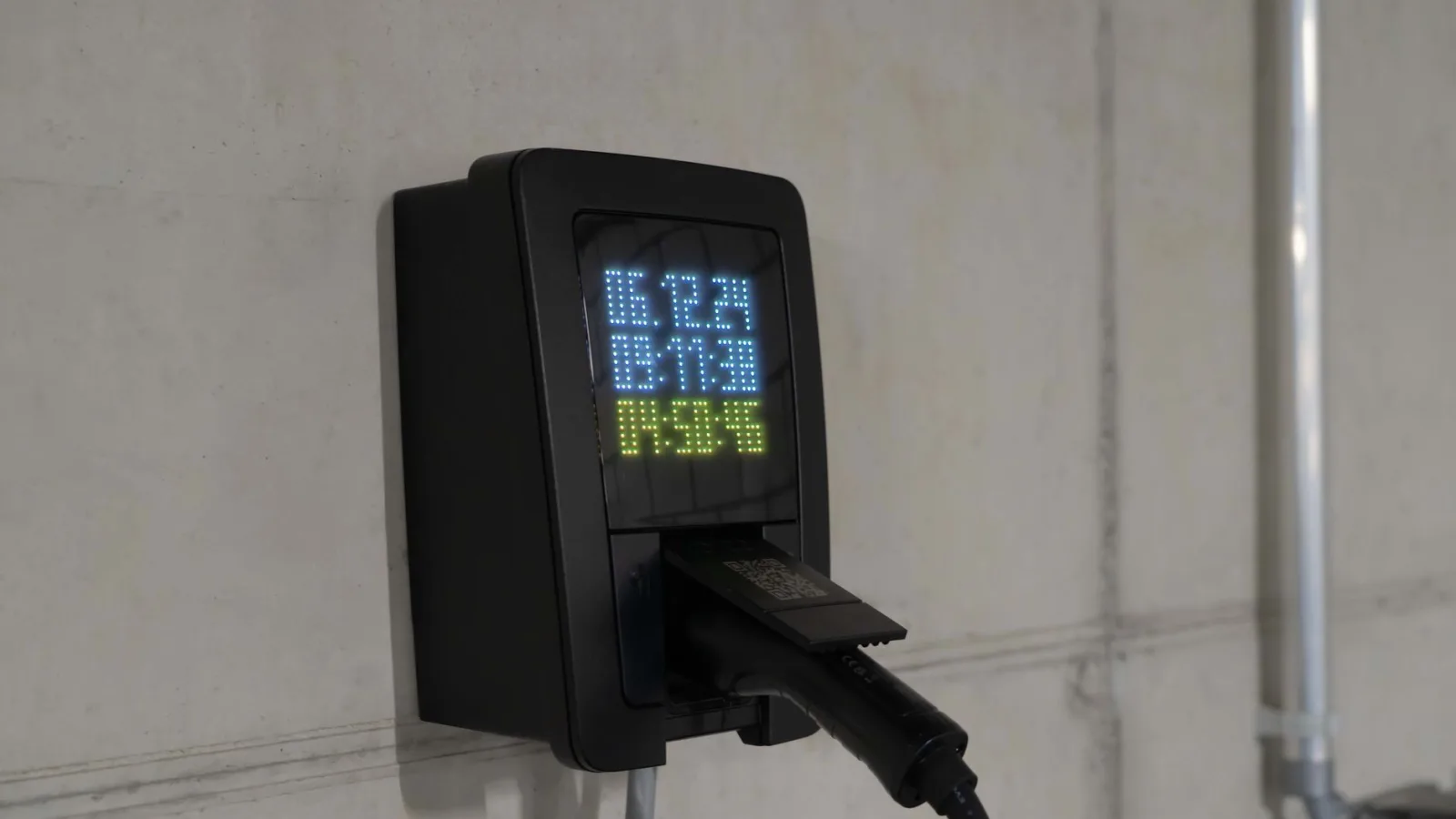
Schneider Electric has begun selling a new home electric vehicle charger that includes dynamic load balancing hardware as standard, a move the company says undercuts a comparable set-up from Tesla.
The Schneider Charge comes with a pair of current transformer (CT) clamps in the box, allowing homeowners to use dynamic load balancing without buying additional equipment. The technology lets an EV charger draw on whatever power capacity is currently unused within a household's main electrical panel.
For example, if a property's main breaker is rated for 200 amperes and the house is already drawing 160 amps for other appliances and systems, the charger can supply the remaining 40 amps to a vehicle without tripping the breaker. Should household consumption drop to 100 amps, the charger can then use the extra headroom to increase charging speed.
Dynamic load balancing is an established concept in EV charging, but Schneider Electric has opted to include the necessary hardware from the outset rather than sell it as an add-on. By contrast, Tesla's widely used Wall Connector requires a separate Remote Meter accessory to enable the same functionality, which costs $210 on its own. Combined with the $535 price of the Wall Connector itself, the total hardware cost for Tesla's equivalent set-up comes to $745.
The Schneider Charge retails for $695, undercutting that combined Tesla price. The company has positioned the charger as a practical option for homeowners without a high-capacity mains connection, who might otherwise need to upgrade their electrical supply to accommodate high-powered EV charging.
The unit can output up to 11.5 kilowatts at 48 amps and features a compact enclosure suitable for indoor or outdoor mounting, similar to Tesla's charger. Customers can select either a NACS or J1772 connector when ordering, and the charger is paired with a smartphone app for scheduling and managing charging sessions.
Installation of the Schneider Charge involves some additional considerations. The included CT clamps must be hardwired to the charger's main board, meaning a set of extra wires needs to run from the main panel to the charger unit. This is straightforward when the charger is installed close to the main panel, but could add complexity and cost where the charger and panel are located in different parts of a property.
Tesla's optional Remote Meter, by comparison, communicates wirelessly with the Wall Connector, which can simplify installation in some homes. Tesla's charger also remains a strong option for those who do not require dynamic load balancing.
Schneider Electric's new charger is currently only available as a hardwired model, supplied with a 25-foot cable. The company has said a plug-in version of the charger will be released in early 2025.
The launch comes amid growing interest in home charging solutions that make efficient use of existing household electrical capacity, potentially reducing the need for costly panel upgrades as more households add EVs and other high-demand appliances such as heat pumps.