Rivian founder and chief executive RJ Scaringe has confirmed that Europe, including the UK, will be the next major market for the American electric vehicle start-up, with the company's new R2 mid-size SUV set to be the first model brought to the region.
In an exclusive interview with Auto Express, Scaringe said the R2 had been engineered with European customers in mind, in anticipation of Rivian eventually launching on this side of the Atlantic. The vehicle is designed to compete directly with the Tesla Model Y, alongside a number of other established electric SUVs already sold in the UK and Europe.
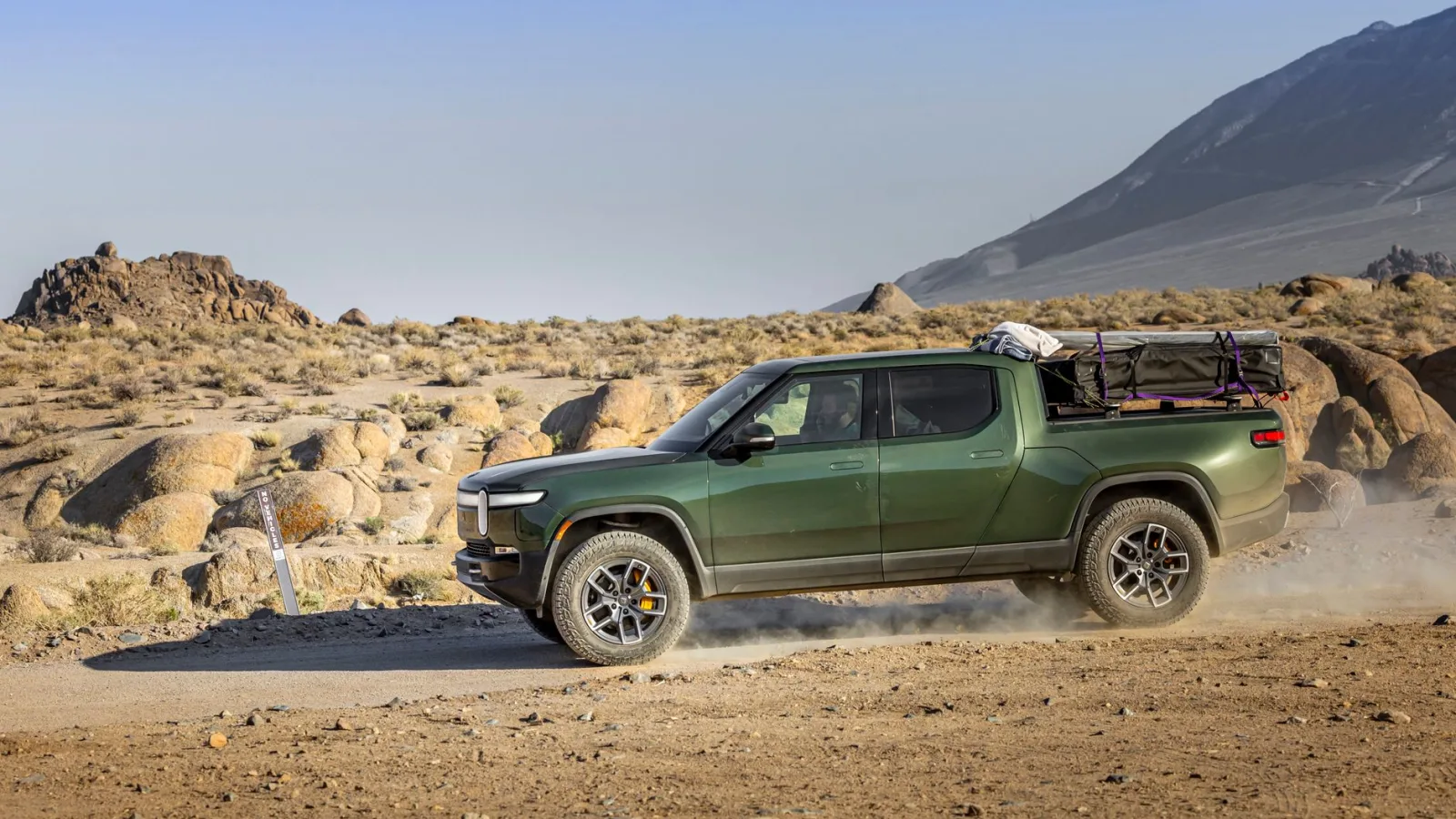
The R2 is built to perform both on and off road, and combines technology and practicality, including a torch built into the driver's door aimed at outdoor-focused buyers. Scaringe noted that many American customers already assume Rivian is a European car company, given the styling and character of its vehicles.
Alongside the R2, Rivian is also developing a smaller crossover hatchback, the R3, along with a high-performance tri-motor version called the R3X, developed by the company's in-house Rivian Adventure Department. Scaringe indicated that a more affordable model, referred to as the "R4", could follow at a later stage, though the success of the R2 will determine the pace of that expansion.
In the United States, the R2 starts at just under $45,000, equivalent to around £33,300. However, pricing in Europe is expected to be higher, with estimates suggesting a starting price of around £40,000, placing it close to the Tesla Model Y and increasing competitive pressure in an already crowded EV market. Asked whether Rivian was ready for the tougher competitive environment in Europe, Scaringe said: "We'd better be."
The Rivian chief executive said he believed the R2 and the company's other vehicles would stand out in a market he views as increasingly homogenised. "There's a lot of cars that they're different brands, maybe slightly different styling, but they're sort of the same and they don't feel that different," he said. "As a car enthusiast, I sort of lament that because I really loved the period of time where different brands had wildly different takes on a segment."
Rivian's European entry will also bring it into direct competition with Chinese manufacturers for the first time. Scaringe praised the build quality of the Xiaomi SU7 and the broad appeal of BYD's model range, though he suggested some Chinese brands attempt to offer too many features, which can compromise the simplicity of the user experience. He said Rivian's approach was to prioritise a consistent user experience across its vehicles, which is part of the reasoning behind the company's decision not to offer Apple CarPlay.
Scaringe described Rivian's strategy as one of vertical integration, with the company developing much of its own technology in-house rather than relying on external suppliers. "Anything that has to do with the high-voltage or the low-voltage system, we brought in-house," he said. "We even developed our own silicon chips for self-driving."
The company has recently broken ground on a new factory in Georgia, in the United States, which is expected to open in 2028 with an initial production capacity of 300,000 vehicles per year. Scaringe said this facility would play a key role in supporting future European sales. Over the longer term, he said Rivian aims to scale up to producing millions of vehicles annually, a figure that would bring it closer to Tesla, which produced more than 1.6 million electric vehicles in 2025.
"The 'bet the company' element of this is that we're building this large engineering capability to support becoming a much larger business," Scaringe said. "And the only way we become a much larger business is if we have a product like R2. And therefore, the R2 must be successful to support the way Rivian's been designed."
Rivian is currently projecting deliveries of up to 70,000 vehicles this year, an increase of almost 70 per cent compared with 2025. Scaringe said this level of demand meant the company's production capacity would remain fully committed for some time, which was part of the reason he was unable to give a firm timeline for when Rivian vehicles would arrive in Europe.