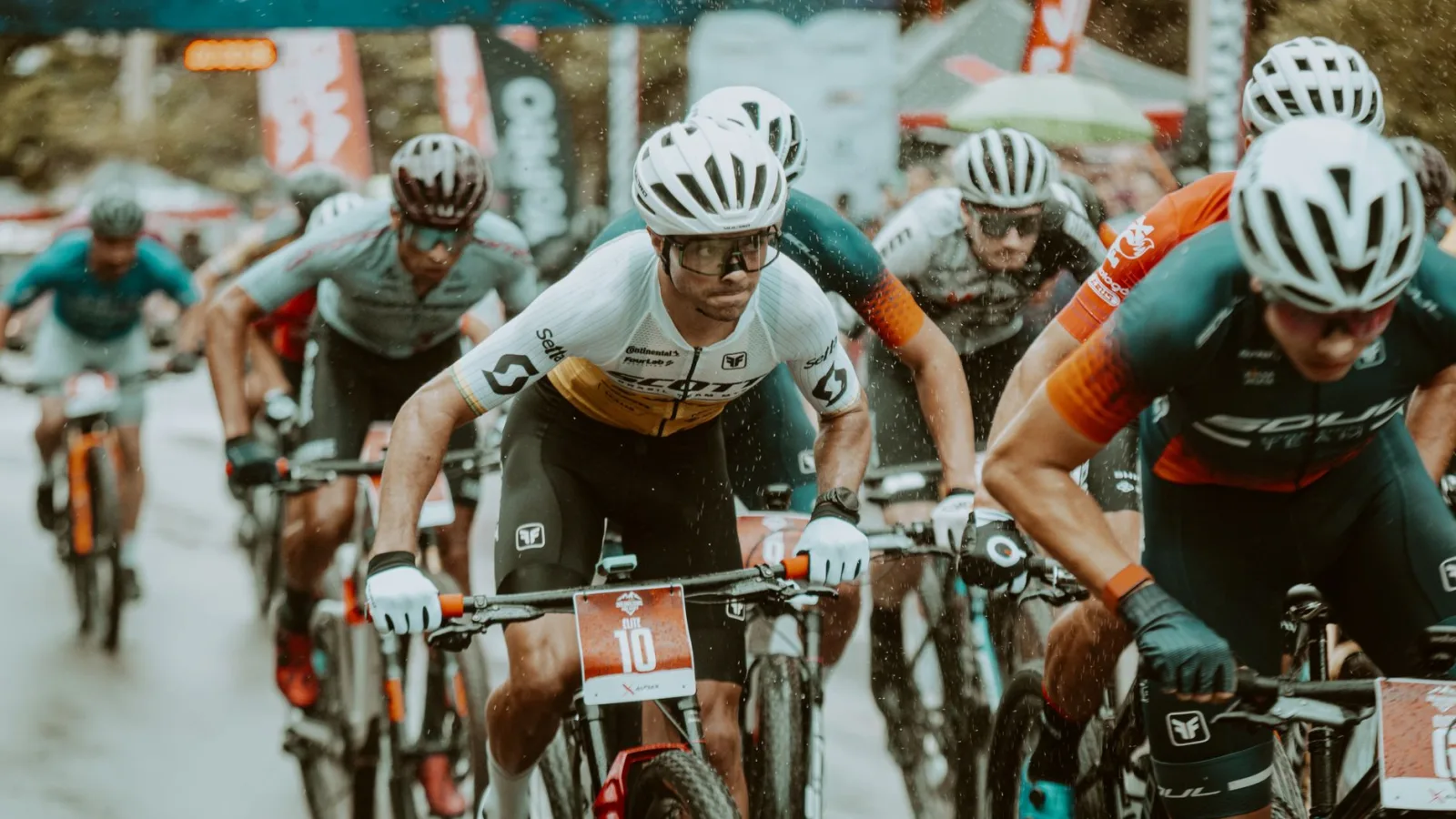
Photographer Pete Goding has described the practical challenges of documenting the 2026 Tour de France, offering a behind the scenes account of a race that can transform city streets and mountain roads for only a few hours before moving on.
For travellers and spectators, his account is a reminder that the Tour is not only a sporting event but also a large moving operation. Roads are closed, barriers appear, police lines tighten and entire neighbourhoods can shift from ordinary daily life to controlled race space with little room for error.
Goding, who has now photographed 20 editions of the Tour, began this year’s race in Paris, close to where he covered his first Tour two decades ago. He recalled the contrast between a calm morning near Place de la Concorde and the knowledge that the world’s most prominent cycling race would soon pass through the same streets.
Much of the work, he explained, depends on access. Before the Covid pandemic, there were 18 accredited in-race photography motorcycles on the Tour. This year, according to Goding, there were nine, requiring smaller agencies and collectives to share allocations and pool images in order to maintain coverage from within the race convoy.
Goding was working with a small Belgian-Italian collective, which meant that any day on the back of a motorcycle had to be used carefully. His allocation included the opening team time trial, several sprint stages and a mountain finish at Orcières-Merlette.
The opening stage in Barcelona provided limited racing drama from the motorbike itself, so Goding used the city as part of the visual story. He photographed riders against the Sagrada Família, switching between long and wide lenses as teams passed through the streets. The stage also brought a practical problem when his motorbike driver left with his water bottles, leaving him on hot tarmac until Danish supporters helped keep him supplied with water.
Such details are familiar to people who follow the Tour closely. The event is carefully organised, but those working around it still rely on quick decisions, local knowledge and help from people along the route. For visitors, it can also mean long waits behind barriers, restricted movement and limited access to areas that are usually open.
The mountain stages brought a different set of conditions. During stage 18, on narrow Alpine roads between Voiron and Orcières-Merlette, Goding and his motorcycle driver moved between the breakaway and the pursuing peloton, stopping briefly for wider scenic images before returning to the race.
He described the difficulty of photographing Richard Carapaz’s late attack when the rider moved up on the same side of the road as the motorcycle. With little space and the race closing in, Goding had to shoot while holding on as the bike accelerated. Carapaz went on to win the stage, according to the source account.
Stage 19 brought another major moment, with Tadej Pogacar winning on Alpe d’Huez and, according to Goding’s account, surpassing Marco Pantani’s longstanding climbing record. On that day, Goding was positioned at the finish rather than out on the climb, where modern access arrangements have made post-stage photography more controlled than in earlier Tours.
He said the work at the finish line involved anticipating where the winner would move after crossing the line, while avoiding blocking other photographers and television crews. With the podium close to the uphill finish, he positioned himself to capture both the line and the immediate celebrations.
On the final Alpine stage, Goding set up a remote camera on the Galibier and asked a cycling journalist travelling with him to trigger it while he worked elsewhere. The arrangement worked, illustrating the informal cooperation that often supports formal media coverage at major events.
The final day in Paris underlined how closely managed the Tour has become, particularly on the Champs-Élysées. Goding described a heavily secured route, with officers placed at regular intervals behind barriers and movement tightly controlled. He also recalled previous incidents in which photographers who ignored access rules faced immediate consequences.
That level of security is significant for anyone planning to watch the race in person. Even where the atmosphere appears relaxed, spectators and accredited media operate within strict boundaries, especially in central Paris and near finish areas. Access points, barriers and police instructions can determine how quickly people are able to move around the route.
Goding’s own final day included an unexpected mishap when he tripped over a low plastic barrier on the Champs-Élysées. A camera took much of the impact, leaving him needing a replacement body before the race had finished. A travelling companion brought a spare, allowing him to continue working.
Across his account, the Tour emerges as both a sporting event and a logistical exercise shaped by timing, terrain, security and cooperation. For those watching from the roadside or travelling through host cities, it offers a clear picture of why the race can feel both fleeting and highly controlled: it arrives quickly, changes the public space around it, and then moves on to the next stage.