Europe’s cultural landscape extends beyond its most visited cities, with several destinations offering world-class art, culinary experiences, and historical significance without the pervasive crowds. From the artistic regeneration of Nantes to Basel’s celebrated museums and the Hanseatic history of Lübeck, these locations present distinct cultural itineraries for travellers.
Nantes, France: A Vision Inspired by Jules Verne
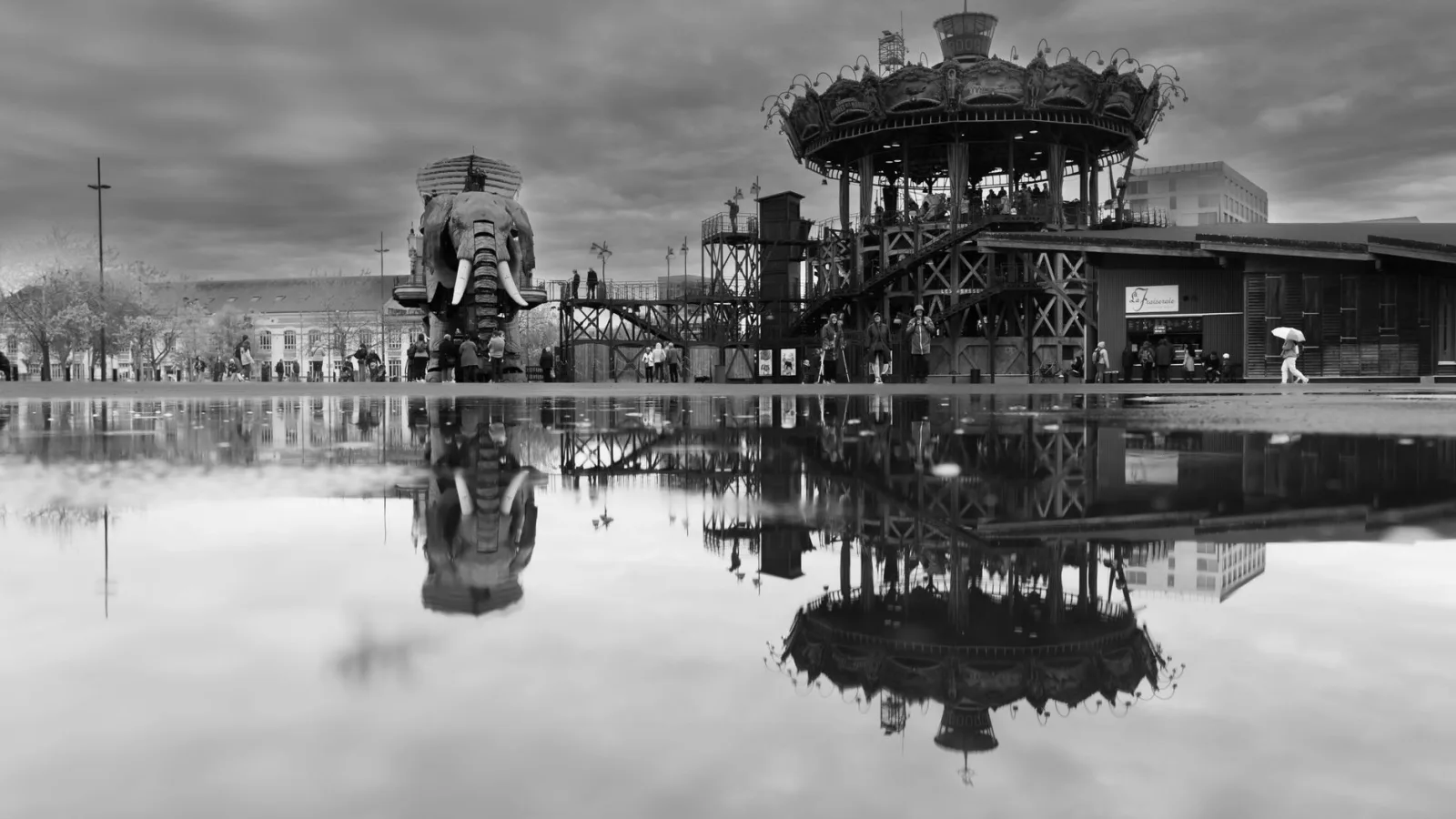
Nantes, situated on the Loire River, has undergone significant artistic and urban regeneration, drawing inspiration from its most famous son, Jules Verne. The city's industrial past, particularly its shipbuilding heritage, has been reimagined through projects such as Les Machines de l’Île on the Île de Nantes, transforming abandoned quays and warehouses into a unique artistic park.
Central to Les Machines de l’Île is the Carrousel des Mondes Marins, a three-storey steampunk carousel featuring fantastical marine creatures. The Grand Éléphant, a 12-metre-high mechanical elephant, transports passengers and interacts with bystanders. The mechanics behind these creations can be explored at the Galerie des Machines.
The city's connection to Verne also fuels Le Voyage à Nantes, a summer arts festival (July to September) that transforms streets, parks, and public spaces into an open-air art gallery with site-specific installations. Notable works include "Fossil Opera" in Place Graslin, depicting ammonites appearing to engulf cars. Some festival installations become permanent fixtures, contributing to an extensive collection of contemporary public art, such as Les Anneaux on the Quai des Antilles, and Tadashi Kawamata’s Belvédère de l’Hermitage.
Cultural sites are linked by the Ligne Verte, a 20-kilometre green line painted on the pavement. This trail guides visitors through the 19th-century Passage Pommeraye, past the Château des ducs de Bretagne, and to the Musée d’arts de Nantes. The Jardin des Plantes, a botanical garden with art installations, and Lieu Unique, a cultural space in a former biscuit factory, are also on the route. Future developments include the Jardin Extraordinaire, a new garden in a disused granite quarry inspired by Verne’s "The Mysterious Island," and the Cité des Imaginaires, a forthcoming cultural hub and expanded Jules Verne museum. Accommodation in Nantes includes the Oceania Hôtel de France, with doubles from €101 room-only. Joanne O’Connor's visit was supported by Le Voyage à Nantes.
Basel, Switzerland: A Hub for Art and Design
Basel, Switzerland’s third-largest city, is establishing itself as a significant centre for art and culture. Its old town features a notable cathedral and offers riverside leisure, including opportunities for swimming in the Rhine during warmer months. The city's artistic offerings are extensive, encompassing a range of museums.
The Kunstmuseum Basel holds over 300,000 works spanning eight centuries, including pieces by Monet, Van Gogh, and Warhol. The Museum Tinguely is dedicated to the unique kinetic sculptures of Swiss artist Jean Tinguely. Beyond the city centre, the Fondation Beyeler in Riehen presents modern and contemporary art, often hosting major exhibitions. A short journey across the German border leads to the Vitra Design Museum in Weil am Rhein, home to one of the world's largest collections of modern furniture design.
The Vitra campus is an architectural destination, featuring buildings by Frank Gehry, Herzog & de Meuron (Vitra Schaudepot), Zaha Hadid, and Tadao Ando. The campus also includes a garden by Piet Oudolf and the Doshi Retreat, a reflective space designed by the late Indian architect Balkrishna Doshi. The Schaudepot displays iconic furniture from the 19th century to the present, by designers including Verner Panton, Le Corbusier, Alvar Aalto, and Charles and Ray Eames. The Volkshaus, a boutique hotel in Basel's old town, offers doubles from 152 Swiss francs (£138) room-only. Max Benato's observations contribute to the understanding of Basel's cultural landscape.
Lübeck, Germany: Hanseatic History and Medieval Charm
The port city of Lübeck in Germany, a UNESCO World Heritage site, showcases a remarkably preserved medieval core despite historical events. Situated on an island encircled by the rivers Trave and Wakenitz, the city's old town is characterised by its distinctive seven church spires and red brick Gothic architecture.
Visitors can explore the city from the water with electric boat tours. On land, the Holsten Gate marks an entry point to the old town, leading to sights such as the five main churches – including St Petri’s, which offers panoramic views from its viewing tower – and the 800-year-old town hall. Lübeck’s unique urban fabric includes approximately 80 hidden alleyways and courtyards, now charmingly restored.
The European Hansemuseum chronicles the history of the Hanseatic League, the powerful medieval trade network that contributed to Lübeck's wealth. The Museum Behnhaus Drägerhaus displays 19th and early 20th-century German and European art, including works by Edvard Munch. The Günter Grass-Haus is dedicated to the Nobel laureate. While the HanseKulturFestival occurs every five years (next in 2028), the city hosts annual museum, theatre, and literature nights, alongside summer pop-up music. Lübeck offers open-air swimming areas and is a short trip from the seaside resort of Travemünde. Traditional Hanseatic cuisine, including North Sea fish and Holstein meat, can be found at the medieval Schiffergesellschaft restaurant. The Buddenbrookhaus museum, dedicated to Thomas Mann’s epic novel, is currently undergoing renovation and is expected to reopen in 2030. Accommodation options include Liho Lübeck, with doubles from £73 room-only. Rachel Dixon's trip was supported by germany.travel and luebeck-tourismus.de.
Parma, Italy: Renaissance Art and Culinary Delights
Parma, in Italy’s Emilia-Romagna region, offers a blend of Renaissance art and a celebrated food culture, often with fewer tourist crowds than Italy's more renowned cities. Accessible by train from Milan or Bologna, its historic centre is compact and suitable for walking, revealing a rich architectural heritage.
The Piazza Duomo features the 900-year-old Romanesque cathedral, notable for Antonio da Correggio's illusionist fresco in its cupola. Adjacent is the early Gothic Battistero, an octagonal baptistery distinguished by its bare exterior and an interior richly decorated with 13th and 14th-century paintings. The medieval Monastero di San Giovanni Evangelista, with its cloisters and garden, offers a peaceful retreat. Entry to the monastery and cathedral is free.
A central cultural attraction is the monumental Palazzo della Pilotta, a Baroque complex housing museums, a library, and the 400-year-old Teatro Farnese, almost entirely constructed from wood. The Galleria Nazionale di Parma, within the Palazzo, contains a collection of Old Master paintings, including works by Leonardo da Vinci, Fra Angelico, Canaletto, and Tintoretto, accessible without advance booking. Parma is also renowned as a food capital. Establishments like OsteMagno serve "tagliere" boards laden with local specialities such as prosciutto crudo di Parma, artisan salami, and Parmigiano Reggiano cheese, often paired with Lambrusco wine. Traditional trattorie, such as Da Antonia and Trattoria Corrieri, offer homemade pasta dishes at competitive prices. The city also has a strong connection to opera, being the birthplace of Giuseppe Verdi, with performances occasionally held at the intimate Teatro Regio. Palazzo Dalla Rosa Prati provides accommodation with doubles from €80 room-only. John Brunton provides insights into Parma's cultural and culinary offerings.
Santander, Spain: A Coastal City's Cultural Ascent
Santander, a port city in northern Spain, is undergoing a notable cultural expansion, transforming its image beyond a ferry terminal. Blessed with a bay facing the Cantabrian mountains, beaches, and historical plazas, the city is enhancing its artistic infrastructure.
A key development is the opening of Faro Santander on 8 September, a new cultural centre within the former Banco Santander headquarters. This institution will display a 1,000-piece art collection, featuring works by masters such as Velázquez, Goya, Titian, Rubens, and Picasso. Designed by British architect David Chipperfield, the Pereda building has been modernised into a museum space. The city's cultural profile will further expand in 2027 with the opening of a Reina Sofia Museum outpost, which will house the Archivo Lafuente, including collections on dadaism and the Spanish Civil War.
These new additions form an "art triangle" with the existing Centro Botín, a contemporary art centre designed by Renzo Piano, which opened in 2017. The Centro Botín’s permanent collection includes works by Matisse, Juan Gris, Joaquín Sorolla, and Mark Rothko. Santander's seafront is lined with fin-de-siècle villas, a legacy of its popularity as a summer retreat. El Sardinero beach is easily accessible from the city centre. The city's central area is pedestrian-friendly, offering plazas and alleys with bars serving "pinchos," the Cantabrian equivalent of tapas, such as those found at Mesón Rampalay. The Museum of Prehistory and Archaeology of Cantabria (Mupac), home to one of Spain's most important prehistoric collections, is also set to move into a new multimillion-euro building by 2027. Accommodation at Abba Santander offers stylish doubles from €66 room-only. Eddi Fiegel's observations highlight the city's developments, with the trip supported by Faro Santander.