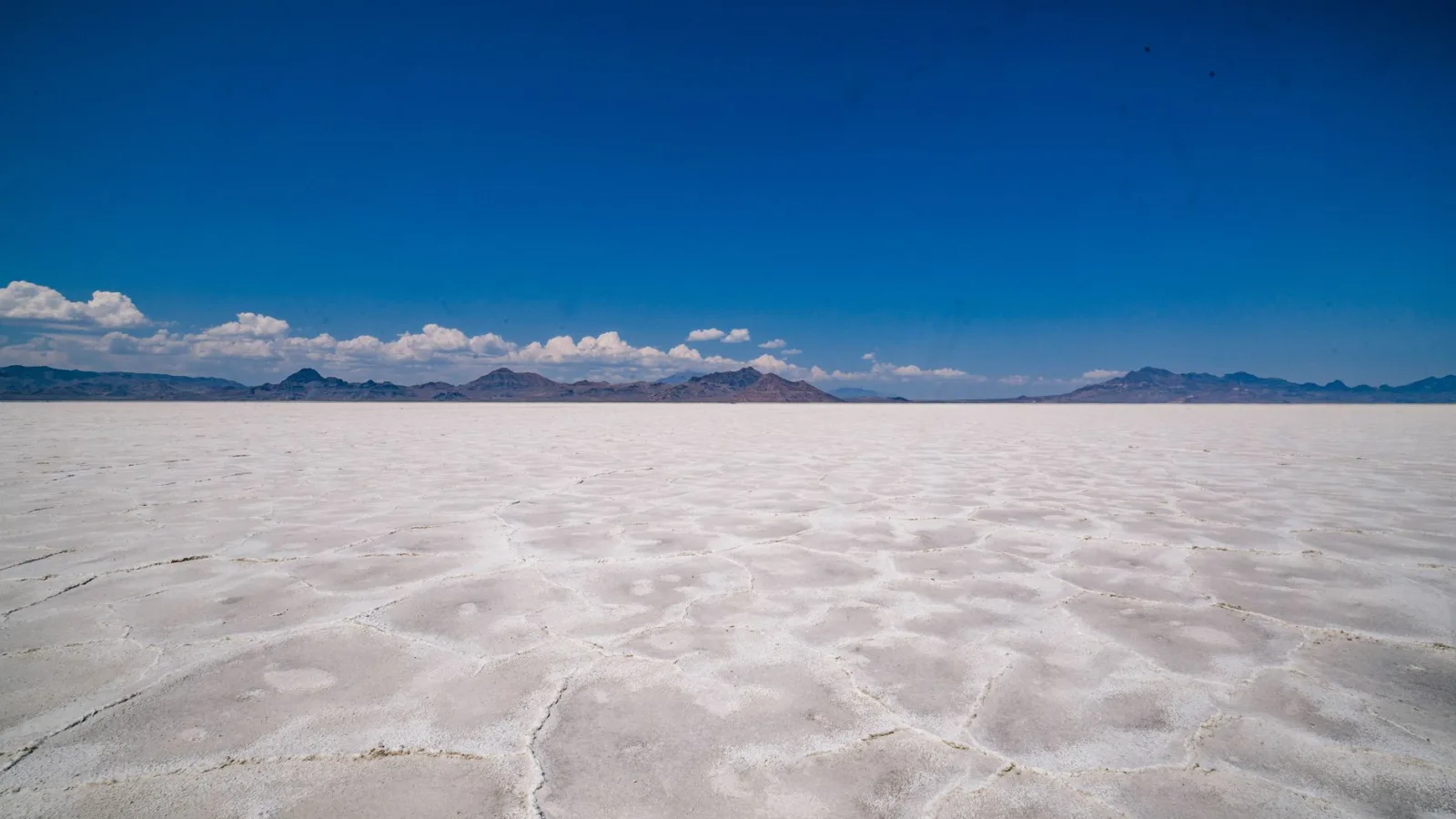
The JCB Hydromax has established a new world land speed record for hydrogen-powered vehicles, recording an average speed of 406.320 mph at the Bonneville Salt Flats in the United States. This achievement marks a significant milestone in automotive engineering, as the vehicle operated with minimal harmful emissions during its record-setting attempt.
The record was determined by averaging two consecutive runs, a standard practice in land speed attempts. The first pass saw the JCB Hydromax reach 400.623 mph, followed by a second run at 412.135 mph. Both runs were completed within a single hour, securing its place as the fastest hydrogen-powered vehicle of any type in history.
This new benchmark significantly surpasses previous records in the hydrogen category. The prior record for a hydrogen internal combustion engine vehicle was held by the BMW H2R, which achieved 185.5 mph in 2004. Furthermore, the Hydromax also outpaced the fastest hydrogen fuel cell car, which had previously reached 303 mph, positioning the JCB vehicle as the outright speed leader for hydrogen propulsion.
Central to the JCB Hydromax's performance are its innovative power units: two internal combustion engines adapted to run on hydrogen fuel instead of traditional petrol or diesel. As hydrogen contains no carbon, the engines' emissions consist almost entirely of water vapour. A minor component of the emissions is nitrous oxide, which is known to contribute to smog.
The vehicle's powertrain configuration is akin to modern dual-motor electric vehicles. Each of the 4.8-litre turbocharged inline-four-cylinder engines is dedicated to powering a separate axle. To manage the immense power, each engine is paired with its own six-speed Xtrac transmission. This setup allows one engine to drive the front wheels and the other to power the rear wheels in synchronised operation.
Collectively, the two engines generate a formidable 1,600 horsepower, with each contributing 800 horsepower. During the record-breaking attempt, the JCB Hydromax consumed two kilograms of hydrogen fuel, resulting in the emission of 18 litres of water as its primary byproduct.
Behind the wheel of the record-setting machine was Wing Commander Andy Green, a figure renowned in the world of land speed racing. Green is also the holder of the absolute all-time land speed record, having achieved 763.035 mph.
Commenting on the achievement, FIA President Mohammed Ben Sulayem stated, "Motorsport has always been a catalyst for technological progress pushing the boundaries of what is possible. This new land speed record continues this tradition, showcasing the potential of hydrogen combustion for the future of sustainable mobility."
The success of the JCB Hydromax is expected to generate renewed interest in hydrogen internal combustion engines within motorsport. Toyota is already exploring this avenue, campaigning a liquid hydrogen-powered Toyota GR Corolla H2 in races and developing the GR LH2 Racing Concept for Le Mans. The record could inspire further research and development, potentially leading to a broader adoption of hydrogen as a clean fuel source in competitive racing and beyond, reinforcing its potential for emissions-free mobility.