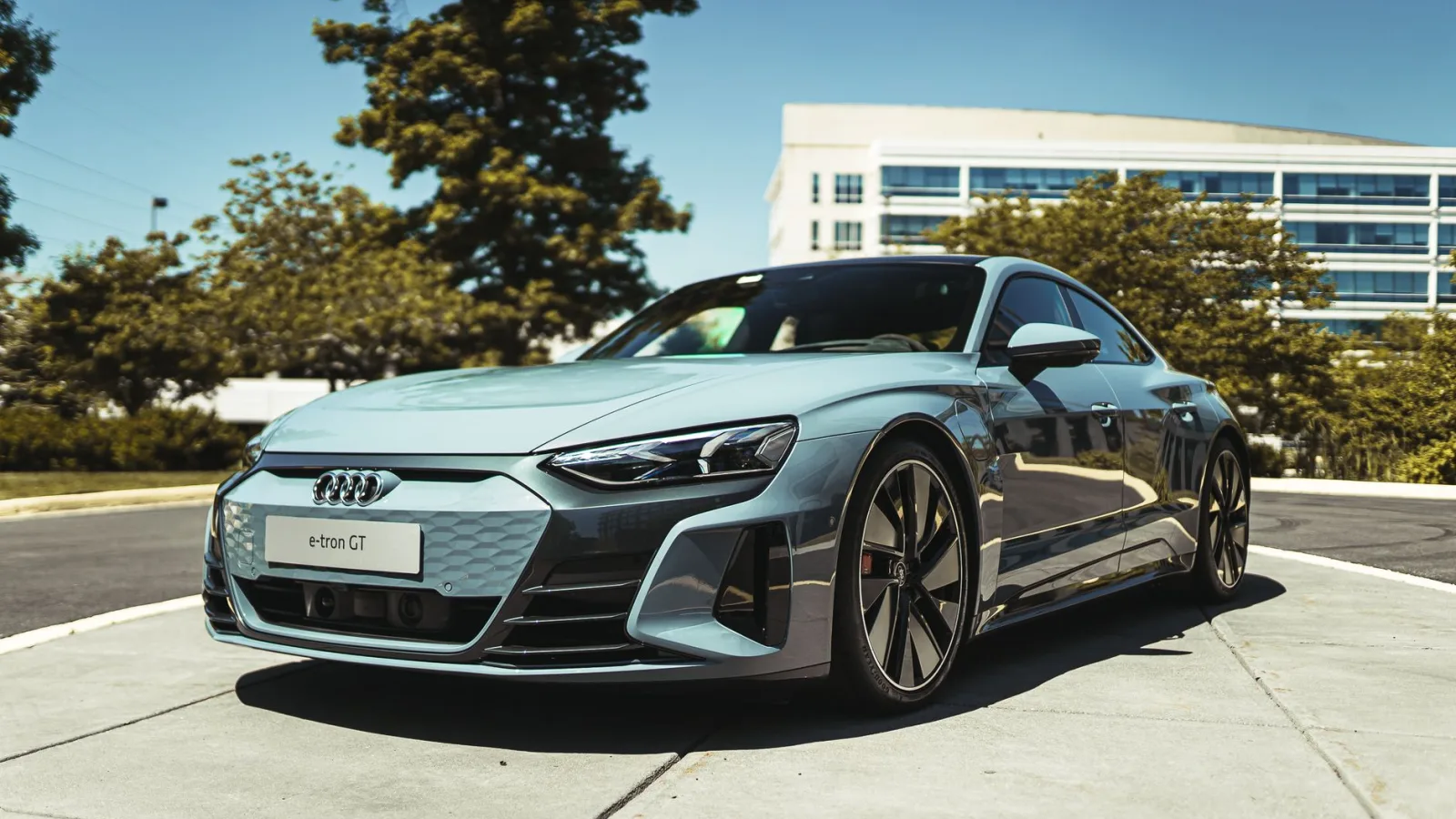
An Audi Q6 E-Tron driven close to its top speed on an unrestricted section of German autobahn covered less than half the distance it has achieved in lower-speed highway testing, underlining the effect of sustained high-speed driving on electric vehicle range.
The test was carried out by YouTuber Bjørn Nyland, who drove a dual-motor Audi Q6 E-Tron Quattro on a stretch of autobahn near Wittenberg. The vehicle has a 100kWh battery pack, of which 94.9kWh is usable, and produces up to 455hp when launch control is enabled.
Nyland began the run with the battery at 92% and drove for much of the test at about 124mph, or 200km/h, according to GPS readings. The car’s speedometer showed between 206km/h and 210km/h, close to the official 130mph, or 210km/h, top speed listed by Audi.
The result was a marked reduction in range. After adjustments for energy losses and a small discrepancy in recorded distance, Nyland calculated consumption at about 1.17 miles per kWh, equivalent to 52.9kWh per 100km. The car covered 96 miles, or 155km, during the test, and he estimated that a full battery would have allowed about 104 miles, or 168km, under similar conditions.
That compares with substantially longer range at more typical motorway speeds. Car and Driver previously tested the Audi Q6 E-Tron Quattro at a constant 75mph, or 120km/h, and found it could travel around 250 miles, or 400km, on a full charge. The vehicle’s estimated EPA range is 307 miles, or 494km.
Electric cars, like petrol and diesel vehicles, become less efficient as speed rises because aerodynamic drag increases sharply. The effect can be especially noticeable in EVs because they carry a smaller usable energy reserve than many combustion cars and generally take longer to recharge than a conventional refuelling stop.
During the autobahn run, the Audi’s displayed energy use initially rose to about 1.1 miles per kWh, or 58.4kWh per 100km, before settling around 1.1 to 1.2 miles per kWh, equivalent to 50 to 55kWh per 100km. Nyland was not able to maintain a perfectly constant speed throughout, because of traffic and temporary speed restrictions, but the car spent much of the test at or near 124mph.
The test also offered a look at how the vehicle managed battery temperature under prolonged load. The battery temperature rose from about 39C to around 49C during the run. Nyland reported no significant thermal limitation until the state of charge was very low, estimating that roughly 5% of the battery’s available energy was lost as heat.
According to the test, the Q6 E-Tron was able to continue at about 124mph until the battery had fallen to around 3%. At that point, Nyland said he began to feel available power reduce. When the battery reached 2%, and the car predicted it would arrive at the charger with 0%, he slowed for approximately the final three miles to ensure he reached the charging stop set as his destination.
The findings are relevant mainly to markets where such speeds can legally be sustained. Germany remains unusual in having sections of autobahn without a general speed limit. In most other countries, driving at 124mph for any extended period would be illegal and would raise safety and enforcement issues well before range became the main concern.
For ordinary motorway use, the test does not change official ratings or lower-speed range estimates. It does, however, provide a clear example of how dramatically energy consumption can rise when an electric vehicle is driven close to its maximum speed for a sustained period.