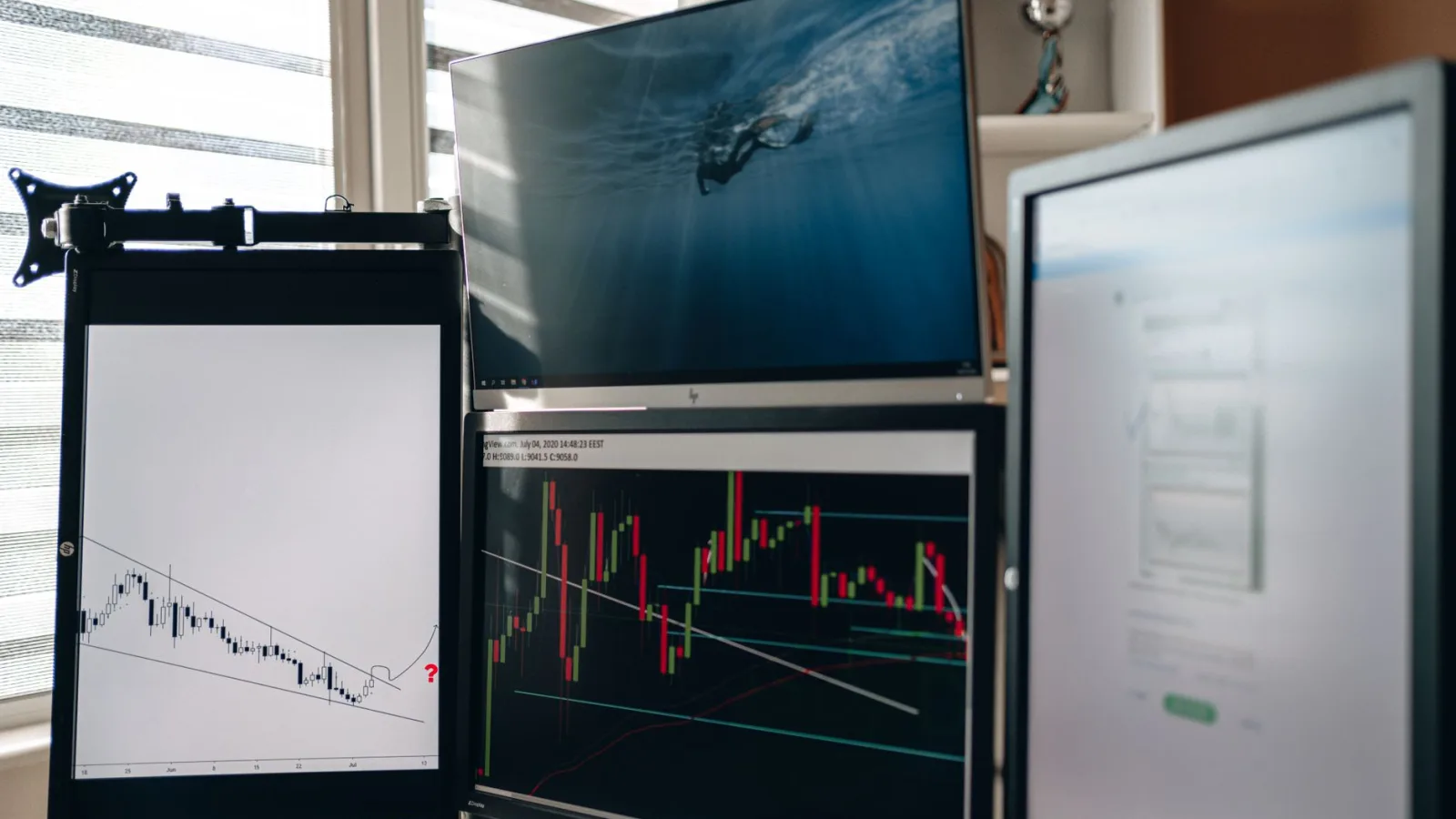
A sell-off in artificial intelligence-linked shares deepened on Monday, hitting major chip stocks in Asia and adding pressure to global markets after a weaker session for parts of Wall Street.
South Korea’s Kospi fell by more than 10%, with trading halted at one stage, while Japan’s Nikkei declined by more than 4%. The moves followed losses in the United States, where US-listed shares in SK fell 7% and Nvidia dropped 5%, allowing Apple to regain its position as the world’s largest listed company by market value.
The retreat has focused attention on investor concerns about the cost and financing of the AI expansion. The Financial Times reported that prices for credit default swaps linked to major technology and AI-exposed companies, including Oracle, Alphabet, Amazon, Meta, Broadcom and Nvidia, have risen to record highs in recent days. Such instruments are commonly used by investors seeking protection against, or exposure to, changes in corporate credit risk.
Chip shares were also affected by a report from The Information that China has begun mass production of domestically developed deep ultraviolet chipmaking tools. The report raised questions among investors about whether progress in Chinese semiconductor equipment could alter the competitive position of established global chip and chip equipment companies.
Jing Jie Yu, an equity analyst at Morningstar, said the market appeared to have been unsettled by signs of progress in China’s chipmaking equipment sector. However, the analyst also said the scale of the sell-off looked like an immediate reaction that may have gone too far.
In Europe, trading opened with limited direction. The Stoxx Europe 600 was up 0.1% in early dealings, while London’s FTSE 100 slipped 0.1%. US futures also pointed lower, with investors continuing to assess the pressure on semiconductor stocks alongside broader movements in bond yields and commodity prices.
Oil prices fell again after a sharp decline in the previous session. Brent crude, the international benchmark, was down 2.7% at $85.95 a barrel, extending a fall that followed an easing in immediate concern over supply disruption. Deutsche Bank’s Jim Reid said markets were balancing the renewed pressure on chipmakers against news that a pause between the US and Iran would continue while talks took place.
In the UK corporate sector, Barclays reported a 17% rise in first-half pre-tax profit, helped by stronger trading and investment banking income. The bank said profit before tax reached £6.1bn, up from £5.2bn a year earlier and ahead of analyst expectations of £5.9bn.
Barclays’ equities trading arm generated income of £1.26bn, up 45% from the same period last year and above forecasts. Its fixed income division was steadier, with income of £1.47bn, roughly unchanged from a year earlier. Investment banking fees and underwriting revenue rose 32% to £747m.
The bank also reported higher charges for possible bad loans. Credit impairment charges rose to £1.4bn for the half year, compared with £1.1bn a year earlier, reflecting the continued effect of higher borrowing costs and economic uncertainty on lenders’ loan books.
Matt Britzman, senior equity analyst at Hargreaves Lansdown, said Barclays’ investment bank had made a significant contribution to the results. He noted that costs were higher than expected, but said income growth, a larger dividend and a £1bn share buyback strengthened the overall update. Barclays also raised its full-year income target.
The results prompted renewed calls from the Trades Union Congress for banks to face higher taxation. The union body argued that stronger profits in the sector showed lenders could contribute more towards support for households, including through a proposed social energy tariff. Barclays has not been accused of wrongdoing, and the comments reflect a wider policy debate over bank taxation and the cost of living.
Consumer goods group Unilever also updated the market, reporting better than expected second-quarter underlying sales growth of 5.8%. The company, whose brands include Dove and Hellmann’s, said the performance was supported by both higher volumes and pricing.
Unilever warned that price growth could accelerate later in the year as commodity-related price increases continue to be passed through to markets. Chief executive Fernando Fernandez said the group had delivered a stronger first half, including what he described as its best volume quarter in more than a decade.
The company said it now expects underlying sales growth for 2026 to be within its multiyear forecast range of 4% to 6%, rather than at the bottom end of that range. The update comes as large consumer goods companies continue to manage input cost pressures while trying to maintain sales volumes in markets where household budgets remain under strain.
The day’s market moves underline the different pressures facing investors: questions over the durability of AI-linked valuations, falling oil prices, shifting expectations for banks, and continued sensitivity to consumer pricing. Attention is likely to remain on technology shares and corporate earnings as markets assess whether the current retreat in chip stocks is contained or becomes a broader drag on sentiment.