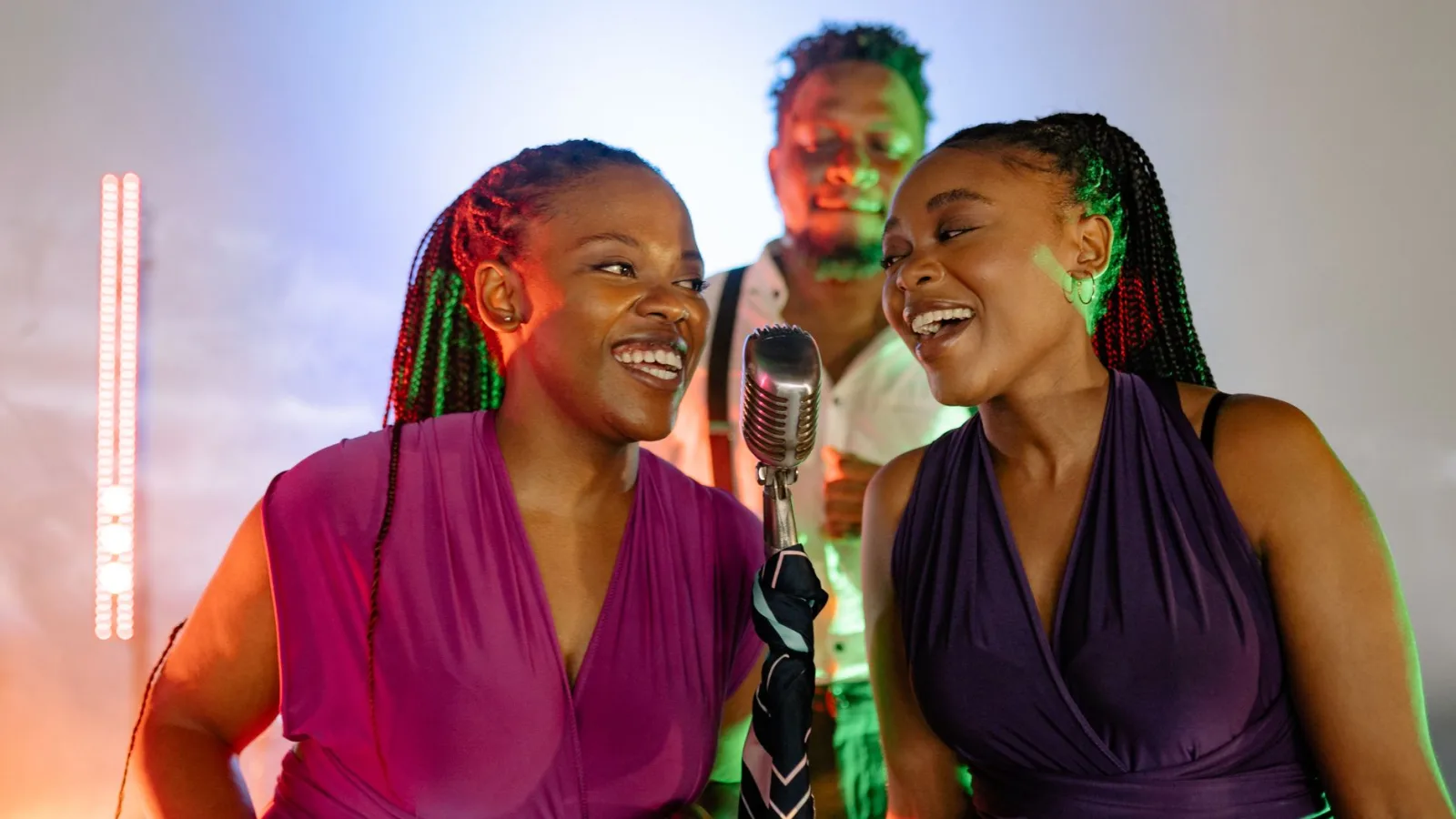
The Womack Sisters are preparing to release their debut album after building a career shaped by one of soul music’s most notable family histories, years of industry resistance and a decision to fund their own work.
The trio, BG, Zeimani and Kucha Womack, are the daughters of Cecil and Linda Womack, who performed as Womack & Womack and are best known for songs including Teardrops and Love Wars. Their wider family includes Linda’s father, Sam Cooke, widely known as the “king of soul”, and their uncle Bobby Womack, whose career included Across 110th Street, If You Think You’re Lonely Now and his final album The Bravest Man in the Universe.
Cecil Womack also wrote Teddy Pendergrass’s Love TKO and songs recorded by acts including the O’Jays, the Four Tops and Patti LaBelle. The sisters’ half-brother’s mother was Mary Wells, the Motown singer known for My Guy.
The group’s forthcoming self-titled album, The Womack Sisters, is due to be released on 14 August through Daptone Records, the label associated with Sharon Jones, the Dap-Kings, Jalen Ngonda and Thee Sacred Souls.
The sisters were exposed to music from childhood, travelling with their parents and spending time in studios and on stage. Kucha has said they were raised between London, Thailand, Paris and Amsterdam, “but mostly here in London”, while also spending time in places including the Bahamas, Jamaica, Bangkok, Phuket, Johannesburg and Southend-on-Sea.
They were not simply observers. Zeimani appeared as a baby on the cover of Womack & Womack’s 1988 album Conscience, which featured Teardrops. The sisters later made their recording debut with their siblings on the 1993 album Transformation to the House of Zekkariyas and opened shows for their parents.
Zeimani said their father regarded music as the obvious path for them. When she considered medical school, she said he told her to focus on making music rather than developing a “Plan B”. “He was like, ‘Plan B? Do Plan A, go hard, get on it,’” she recalled.
Despite that upbringing, the sisters moved to Los Angeles and tried to combine ordinary jobs with their efforts to establish themselves as artists. They worked in a cleaning business, ran a marijuana dispensary and drove for Uber. BG said Uber was a “lifesaver” during that period, while Zeimani said their experiences later fed into their song Chauffeur, which reflects on feeling overlooked while driving passengers.
The group also encountered resistance from parts of the music industry. Zeimani said the sisters “always had soul in mind” and were influenced by artists including Amy Winehouse, but labels they approached encouraged them to pursue pop and other styles. She said they were told soul was not “what’s happening right now” in the United States, particularly for “brown artists”.
BG said the message was passed to their manager, who was embarrassed to relay it. The sisters eventually decided to stop trying to fit other expectations and continue with the sound they wanted to make. “We just put our foot down and said, ‘We’re not doing anything else,’” she said. Unable to secure investment, they funded their own music.
That approach led them to Daptone Records and its co-founder Bosco Mann, who now plays bass in their backing band. BG described the connection with the label as immediate and said the group spent time listening to music with Mann for about a year before recording. When they began work, she said, the process “just rolled” and “flowed”.
Their singles have drawn attention for combining classic soul influences with contemporary production and songwriting. If I Let You received renewed social media interest after support from artists and producers including SZA, Timbaland, Ghostface Killah, Pharrell Williams, Erykah Badu and Questlove.
The sisters have said the album is rooted in personal experience as well as family history. Zeimani described the record as made “from our hearts” and pointed to bereavements within the family, including the deaths of their father and Bobby Womack, as well as the death of an aunt in a car accident. She also said her husband was killed in Atlanta in 2020 after being robbed and shot.
She said the pandemic period gave her space to begin processing loss. “That’s really what you need to do to reset from loss – stop doing everything, just love on yourself, go to the beach, find a reason to smile again,” she said.
The trio’s live performances have also drawn on their family catalogue. At a recent London festival, they performed Teardrops, their parents’ most enduring hit. The sisters said they do not feel intimidated by the prominence of their relatives’ achievements, instead seeing them as examples of how artists from the same family can coexist without competing.
Zeimani said their mother and uncle taught them that they did not have to reproduce earlier careers. “They always told us: you’re not us and you don’t have to be,” she said. “You’re you, and there’ll never be anyone like you.”
The Womack Sisters will be released via Daptone Records on 14 August.