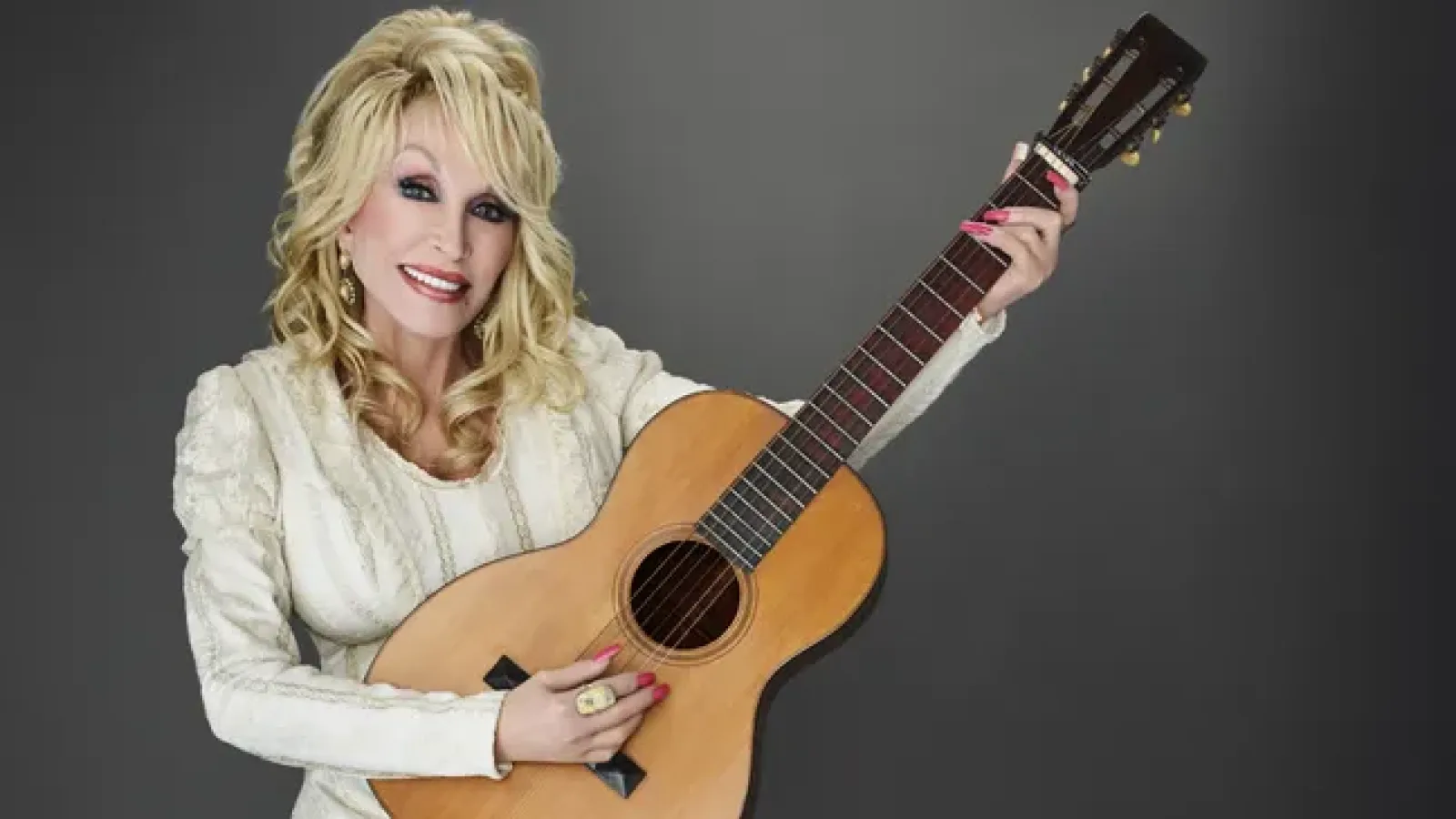
Dolly Parton was a country musician, philanthropist, actress, storyteller and businesswoman. One thing she never was, however, was a politician. But that was not for lack of encouragement.
In 1999, during an appearance on the talk show Prime Time Country!, a young woman in the audience asked Parton whether she would ever run for office. She demurred with characteristic wit: "I think of myself more as a diplomat. That's the kind of people who tell you to go to hell in such a way you look forward to the trip."
It was a skill she called upon repeatedly across a career spanning decades and genres. With fans ranging from grandmothers to Gen-Zers, and from Republicans to Democrats, Parton was, in the words of one academic, "a kind of unicorn" in America's polarised society.
"She is the one person who straddles political divides… the so-called culture wars," said Sarah Phillips, who teaches an Anthropology of Dolly Parton course at Indiana University. Phillips said she still found it hard to speak about the singer in the past tense, and described "curling into a ball" and sobbing in her office upon hearing of the death.
A recent YouGov poll found Parton's net approval rating stood at 65%, compared with Barack Obama's 14%, Taylor Swift's 3%, Donald Trump's -19% and Joe Biden's -18%.
Much of that universal appeal has been attributed to Parton's steadfast refusal to engage in party politics. "I've got as many Republican fans as Democrats and I don't want to make any of them mad at me, so I don't play politics," she once told Fox News.
She twice turned down the Presidential Medal of Freedom from Donald Trump, citing scheduling and health reasons. When Joe Biden later offered her the same honour, she declined again, saying she did not want it to appear she favoured one president over another.
Following news of her death, tributes came from across the political spectrum. Trump ordered American flags to be flown at half mast, an honour usually reserved for senior statesmen and judges, writing on social media: "There has never been anyone like her, and never will." Hillary Clinton wrote that "she was the best of America".
Despite avoiding partisan politics, Parton was never entirely apolitical, speaking out at times on women's rights, LGBTQ equality and Black Lives Matter. Phillips said this willingness to speak her mind, combined with an "amazing sense of self", was central to her appeal.
"She has always been a model for women, carving your own path, looking out for yourself, making sure that you retain the rights to your intellectual property, looking out for your own financial and creative independence," Phillips said. "And if that's not feminism, I don't know what is."
Parton's willingness to defy expectations was evident as early as 1977, when she became a crossover pop sensation without alienating her country base. In 1980 she made her film debut in 9 to 5 alongside Jane Fonda, an actress who remained divisive in parts of the country over her Vietnam War-era activism. Parton refused to distance herself from Fonda, saying at the time: "I respect anybody's beliefs and the fact that they're willing to stand up for whatever it is. But I'm also the kind of person that if I don't like where you got it, I can tell you where to put it." Fonda paid tribute after Parton's death, writing that "she is woven into all our lives and hearts forever".
Parton's carefully cultivated image, always glamorous and self-deprecating, was, according to Phillips, a deliberate choice by a shrewd entrepreneur. When television journalist Barbara Walters questioned her looks in a 1977 interview, Parton replied that the public assumed the joke was on her, when in fact she knew exactly what she was doing and could change her image whenever she chose.
Parton grew up in poverty in a one-bedroom log cabin in Tennessee alongside 11 siblings. As her career grew, she employed family members and invested heavily in her local community, including buying a stake in a Tennessee theme park in 1986 that became Dollywood, now the largest employer in the county. Her philanthropy included the Imagination Library, which sends free books to children, and funding that supported development of the Moderna Covid-19 vaccine.
Musician James Rogers, president of the board of the American Eagle Foundation, which partnered with Dollywood on a bald eagle sanctuary, recalled Parton's personal warmth, describing how she once diverted her entire entourage to kneel and speak with his young daughter before a performance.
Phillips, who grew up in the North Carolina mountains near Parton's home region, said the singer embodied traditional American ideals of independence and self-made success. Reflecting on Parton's singular status, she said: "This summer, I was in France, and I was in Poland, and I ask people, who's the Polish Dolly Parton? Who's the French Dolly Parton? And nobody has an answer, because there isn't one."