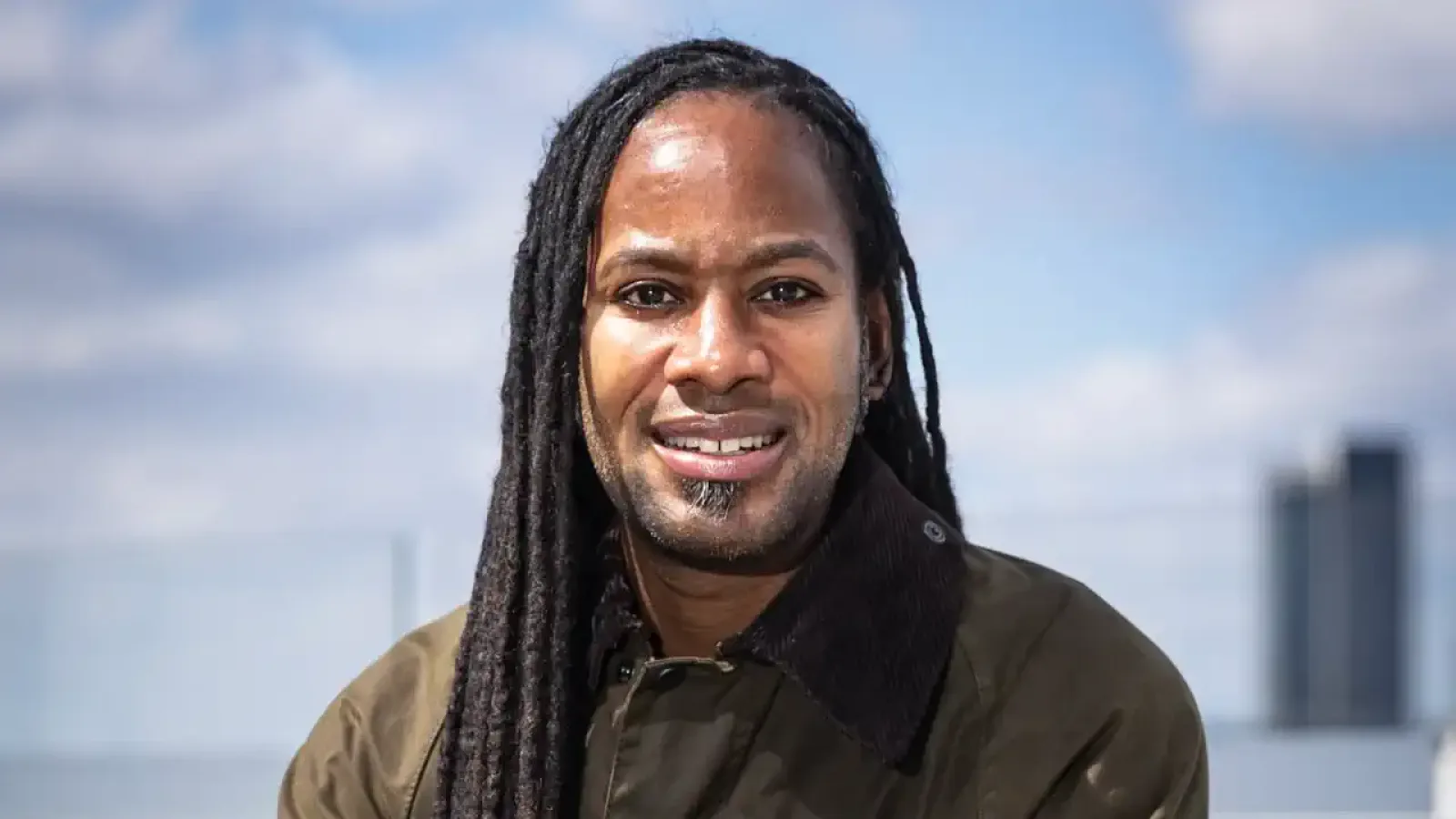
Jason Arday, the academic who resigned last week as a professor at the University of Cambridge amid a high-profile controversy, has been found dead at his home in south London.
The Metropolitan Police confirmed that officers were called to Professor Arday’s address by the London Ambulance Service shortly after 3pm on Friday.
A spokesperson for the Met stated: “A 41-year-old man was pronounced dead at the scene. His next of kin have been informed and are being supported by officers.
“At this time his death is being treated as unexpected, but is not believed to be suspicious. The case is being investigated by officers from the Met’s central south command unit. A file will be prepared for the coroner.”
It is understood that police do not believe anyone else was involved in Professor Arday's death. The London Ambulance Service was the first emergency service to arrive, finding the individual unresponsive inside the property.
In a statement released by his family, they asserted that Professor Arday had been subjected to extensive scrutiny. “Jason was subjected to a campaign of sustained abuse for more than three years since he accepted the role of professor at Cambridge University by those who would leave no stone unturned in their quest to undermine him,” the statement read.
The family added: “The campaign of misinformation was too much for Jason, who was a gentle man and who always wanted to see the best in everyone. We are in shock to have lost this amazing father, partner, brother, uncle and son.
“We won’t comment further at this point beyond asking the press to leave us alone now, and to stop the campaign of harassment which has been waged against Jason and his family for too long.”
The Mayor of London, Sadiq Khan, expressed his condolences and concern regarding the circumstances. “I’m devastated for the family and friends of Jason Arday. He faced an unacceptable public hounding and campaign of abuse. I know many Londoners will be angry and upset this evening,” Mr Khan said.
He continued: “Jason Arday was the victim of a pernicious public shaming that other people in his position simply wouldn’t have faced. His death was a tragedy, but once again it should be a wake-up call for all of us.”
Professor Arday had been appointed professor of sociology of education at Cambridge in 2023, making him the university’s youngest-ever Black professor. However, he tendered his resignation last week following a period of intense public scrutiny that included accusations of plagiarism and questions raised about inconsistencies in statements regarding his career and personal achievements.
In his resignation statement, Professor Arday said: “It is with profound sadness that I write to resign, with immediate effect, from my position at the University of Cambridge and Jesus College.
“When I accepted the extraordinary honour of becoming professor of sociology at Cambridge, it was, without question, the greatest professional privilege of my life.”
He attributed his decision to resign to the immense pressure he had faced, stating that the “relentless accusations, speculation and public commentary have taken a profound toll on me and on those I love.”
Professor Deborah Prentice, Cambridge’s Vice-Chancellor, issued a statement following the news of his death. “We are desperately saddened to hear this tragic news. Our heartfelt sympathies go to Jason Arday’s family and friends at this incredibly difficult time,” she said.
Durham University, where Professor Arday worked between 2019 and 2021, also released a statement. “We are shocked and terribly sad to learn of the death of Jason Arday,” it read. “He is remembered at Durham as a kind and warm person who actively sought to promote opportunities for PhD students. We want to express our deepest sympathy to his family who are in our thoughts.”
Professor Arday’s ascent to a prestigious professorial chair was widely described as remarkable. He had often spoken of his personal journey, including being nonverbal until the age of 11, which necessitated extensive speech and language therapy, and being illiterate until he was 18. This life story notably led to him being a torchbearer for the 2012 London Olympics flame.
After leaving school, Professor Arday pursued further education, culminating in a doctorate in education from Liverpool John Moores University in 2015. This was followed by a succession of academic posts, including a professorship at the University of Glasgow, before his appointment to Cambridge.
The controversy initially centred on accusations that Professor Arday had plagiarised another academic’s work for his PhD thesis. He denied these claims, and an investigation conducted by Liverpool John Moores University earlier this year upheld its decision to award him the PhD.
However, further elements of his life story subsequently came under scrutiny. These included claims of prodigious fundraising for charity, feats of long-distance running, and questions regarding his early childhood account of being nonverbal.
Initially, the University of Cambridge had defended Professor Arday, portraying him as the target of a smear campaign. However, as additional questions emerged concerning his academic career, the university's public support appeared to temper.
On 5 August, Cambridge announced its intention to hold an internal inquiry. This decision followed the receipt of what it described as “new information” regarding Professor Arday’s academic qualifications and honorary appointments, as well as “a number of ongoing complaints regarding academic misconduct.” Jesus College, where he was a fellow, also stated it would conduct its own inquiry.
Despite Cambridge stating that Professor Arday would remain in his post and continue to receive support during the inquiry, he announced his immediate resignation shortly after the university’s announcement.
At the end of last week, the University of Glasgow also confirmed it would launch an investigation into Professor Arday’s academic credentials from his time there.
The controversy had generated considerable division and anger within Cambridge’s academic community, sparking debate between Professor Arday’s supporters and those who questioned the university's decision to appoint him to such a prominent position.
After initially resisting calls for an independent inquiry from some senior staff, Vice-Chancellor Prentice eventually conceded earlier this week, acknowledging the “anger and anxiety around this damaging and difficult case.” She also stressed that the situation was an aberration and should not be used to cast aspersions on the abilities of the university’s staff of colour.
Professor Arday’s memoir, titled Great and Unfortunate Things, was published this week in the US by an imprint of Simon & Schuster, with its UK publication scheduled for later this month. Simon & Schuster has been contacted for comment.