A legal battle over an executive order issued by US President Donald Trump that seeks to overhaul how mail-in ballots are processed has thrown election preparations in several states into disarray, with the midterm elections now less than two months away.
The order, which draws on the powers of the US Postal Service and the Department of Homeland Security, seeks to nationalise elements of how mail voting is conducted across US states. It has prompted a rapid sequence of legal challenges, court rulings and counter-rulings, culminating last week in the US Supreme Court allowing the order to proceed for now, without ruling on its underlying legality.
Within days of that decision, further litigation was filed and a federal judge in Massachusetts issued a fresh 14-day restraining order preventing the measure from taking effect. US District Court Judge Indira Talwani, who issued the injunction, described the order as "a likely unconstitutional regulation for which compliance is practically impossible" given the proximity of the 2026 midterm elections.
Under the US Constitution, control over the timing, place and manner of elections rests with individual states, a principle reinforced by federal legislation passed in 1993. Critics argue the executive order sidesteps this arrangement.
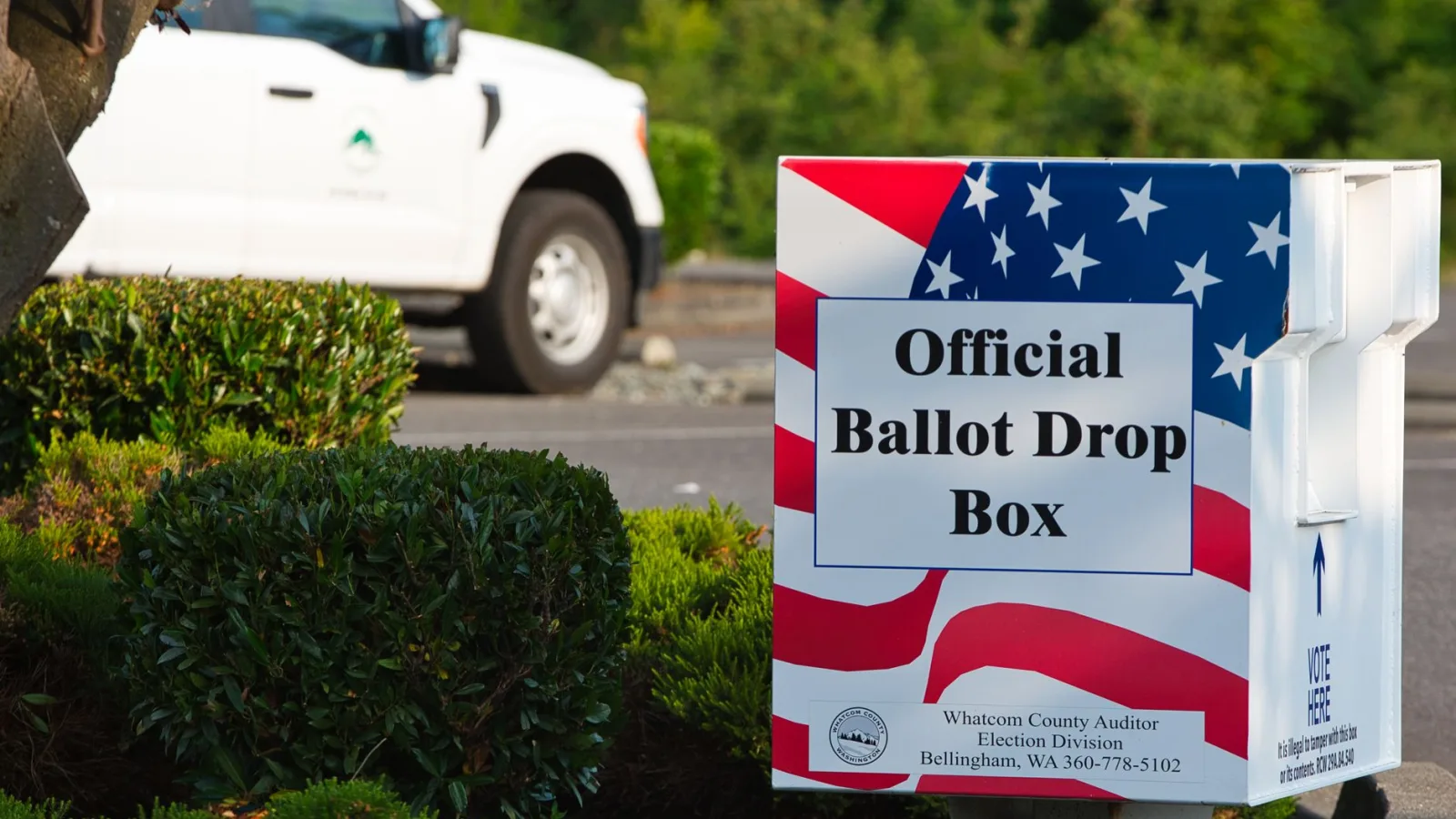
The order seeks to introduce three significant changes to mail voting. New ballot envelopes bearing an intelligent mail barcode and an "Official Election Mail" logo would be required for the Postal Service to process ballots. States would be required to notify the Postal Service of their intention to use the new envelopes at least 90 days ahead of an election. Most contentiously, state election officials would be required to supply the Postal Service with a full list of residents due to receive a mail ballot, understood to be intended for cross-referencing against a separate citizen eligibility list compiled by the Department of Homeland Security. The Postal Service would then have the authority to withhold delivery of ballots to voters whose names did not appear on both lists.
According to a whistleblower report, the Postal Service is developing a system for reviewing ballot batches that defaults towards refusing to send large numbers of ballots if a single unconfirmed discrepancy is found. That system is not yet operational, but its existence has left states uncertain how to proceed, including some due to begin distributing ballots this week.
Liz Avore, a senior adviser at the nonpartisan Voting Rights Lab, said the changes risked undermining, rather than improving, election administration. "It's just taking away from election officials' ability to run the election they need to run," she said.
States face varying levels of disruption depending on how heavily they rely on mail voting and how far advanced their preparations already are. In states such as California, Colorado, Hawaii, Nevada, Oregon, Utah, Vermont, Washington state and the District of Columbia, where a large proportion of the electorate votes by mail, compliance would bring substantial costs to redesign ballot envelopes, though compiling voter lists may be comparatively straightforward given how widely mail voting is already used there.
Other states, including North Carolina, Massachusetts and Washington state, have already begun printing ballots, according to Avore, making compliance effectively unworkable at this stage. North Carolina has gone further and already begun distributing ballots to voters. Massachusetts Attorney General Andrea Joy Campbell said several states were scheduled to send ballots imminently, warning that if the federal government prevailed in the litigation "it would be virtually impossible for states to comply with this unlawful rule." Washington Secretary of State Steve Hobbs has said counties in his state would need to destroy and reprint more than five million ballot envelopes already produced for the November election.
States with decentralised election systems, including Wisconsin, New Hampshire and Minnesota, where individual towns and cities rather than counties administer voting, face a distinct challenge. Avore said such jurisdictions often rely on very small teams of election staff, who would face a significant administrative burden in complying with new federal requirements at short notice.
Legal experts have noted that the Supreme Court's intervention did not resolve the substantive legal questions raised by the order, leaving open the possibility of the case returning to the justices for a ruling on the merits within weeks.
Observers have also pointed out that the disruption caused by the order, regardless of its ultimate legal fate, may serve a political purpose by generating discrepancies and administrative errors that could be used to support claims of election irregularities. Avore noted that other elements of the president's broader election agenda have so far had limited practical effect, with no state having introduced proof-of-citizenship requirements for voter registration and none eliminating no-excuse mail voting. "For the amount of rhetoric and noise that there's been around this, the efforts to change the policies have really flopped," she said.
The immediate legal position remains that the executive order is blocked for a further two weeks under the Massachusetts court's restraining order, with further hearings expected before the situation is resolved.