An Australian aviation crew has completed a demanding midwinter medical evacuation from Antarctica, landing in total darkness and extreme cold to collect a US expedition member from McMurdo Station.
Skytraders, the aviation company involved in the operation, described the mission as “extraordinary” after its Airbus A319, known as Snowbird 1, was sent south following an urgent request for assistance. The patient was safely transferred onto the aircraft and flown to Christchurch, New Zealand, where he received treatment. He is now recovering well, according to the company.
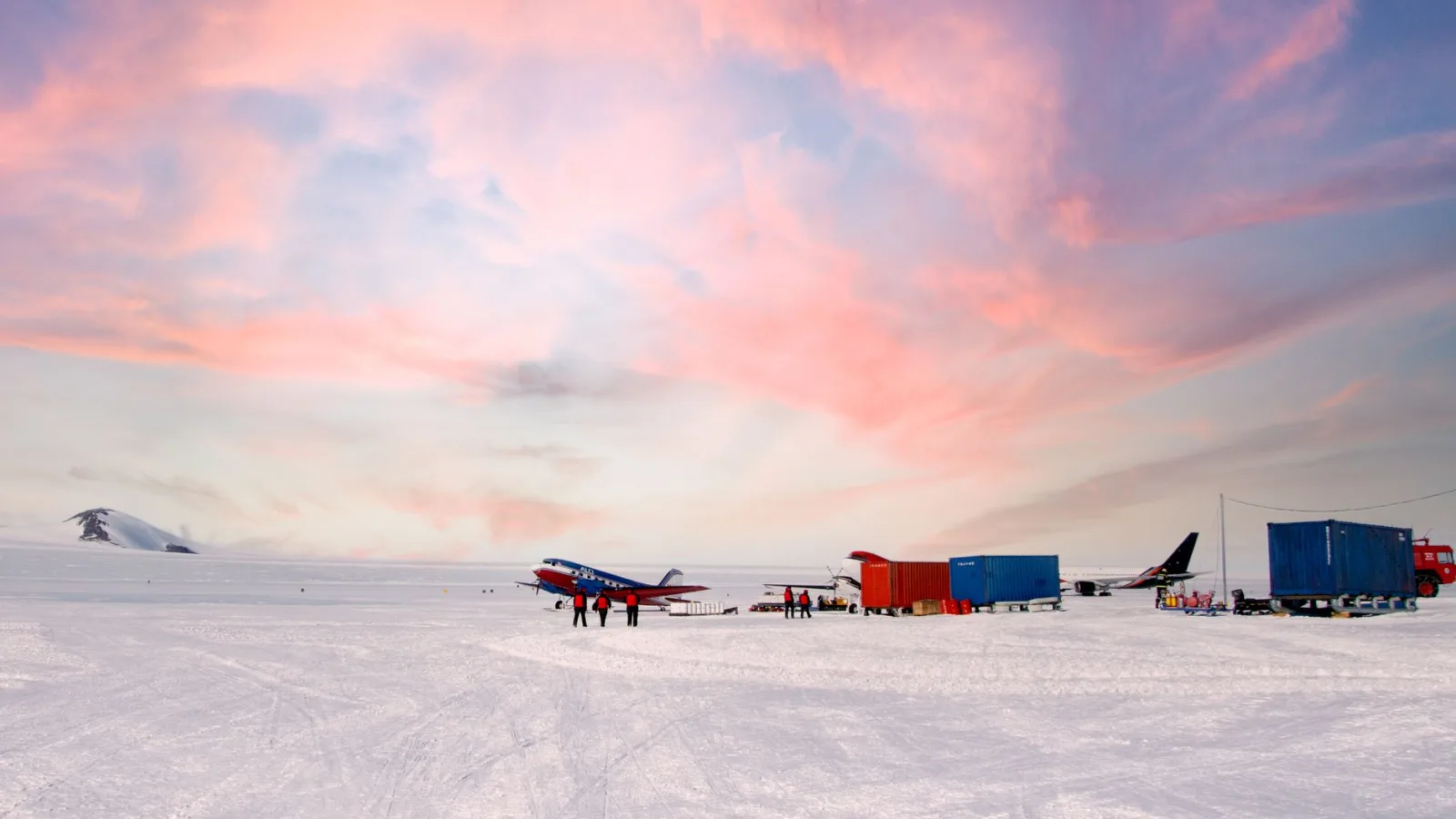
The mission was completed on 31 July after an initial delay caused by severe weather. Skytraders said the aircraft landed in “extremely challenging conditions”, with temperatures at around -43C and no daylight at the US research station on Ross Island.
Captain Louise Robertson, one of four pilots on the flight, said the operation was the first of its kind to take place in July and to be completed in total darkness. “We completed it on the 31 July, and the first day of any sort of sunlight, which was very minimal, would be on the 1 August,” she told the BBC.
The flight departed from Hobart, Tasmania, before heading to Phoenix Airfield, which serves McMurdo Station. Robertson’s husband, Captain Rod Robertson, was at the controls for the landing, with Louise Robertson in the co-pilot’s seat. The couple have been married for 18 years.
“He was in the left seat and I was in the right seat,” she said. She described the evacuation as the most complex operation she had been involved in during seven years with Skytraders and 25 years as a pilot.
The request for evacuation came from the US Antarctic Program through the Australian Antarctic Division on a Wednesday afternoon, Robertson said. Skytraders then began preparing the aircraft for the specialist mission, with engineers and a design team working to fit a stretcher in the rear of the plane.
Robertson said configuring the aircraft took 24 hours, but the departure was then delayed by a further 12 hours while the crew waited for a weather window. “We had quite a narrow time frame that we could actually fly down to Antarctica because there was a snowstorm on the first day that we were intending to go down which stopped the operation,” she said.
The weather also affected preparations on the ground. The runway at Phoenix Airfield, which is made from compacted snow, had to be graded and groomed before the aircraft could land. The process took six hours, and the snowstorm initially prevented station crews from reaching the runway to carry out the work.
The aircraft eventually left Hobart in the early hours of Friday morning. Robertson praised the team at the station, saying the ground crew “did a phenomenal job to make a 3-km-long runway available for us given the conditions they were also facing, -45C and strong wind”.
Once the aircraft landed at Phoenix Airfield, the crew spent exactly one hour on the ground before departing for Christchurch with the patient on board. The short turnaround reduced the time the aircraft and crew were exposed to the severe Antarctic winter conditions.
Captain Al Wallach, another pilot involved in the mission, said its success depended on the specialist work of a large team, including flight crews, meteorologists, operational planners, runway teams and medical personnel.
“Every Antarctic mission demands absolute precision, but winter operations raise the complexity significantly,” he said. “The conditions we encountered were right on the edge of even the most specialised aircraft capability.”
McMurdo Station is the main US research base in Antarctica and is operated by the US Antarctic Program. Winter evacuations from the continent are rare because of the combination of darkness, severe cold, storms and limited runway availability.
Skytraders has previously carried out a similar Antarctic evacuation. In March 2020, the company responded to a US request to evacuate a member of the US Antarctic Program from McMurdo Station. Conditions during that operation were also severe, though temperatures were reported to have been slightly warmer at about -30C.