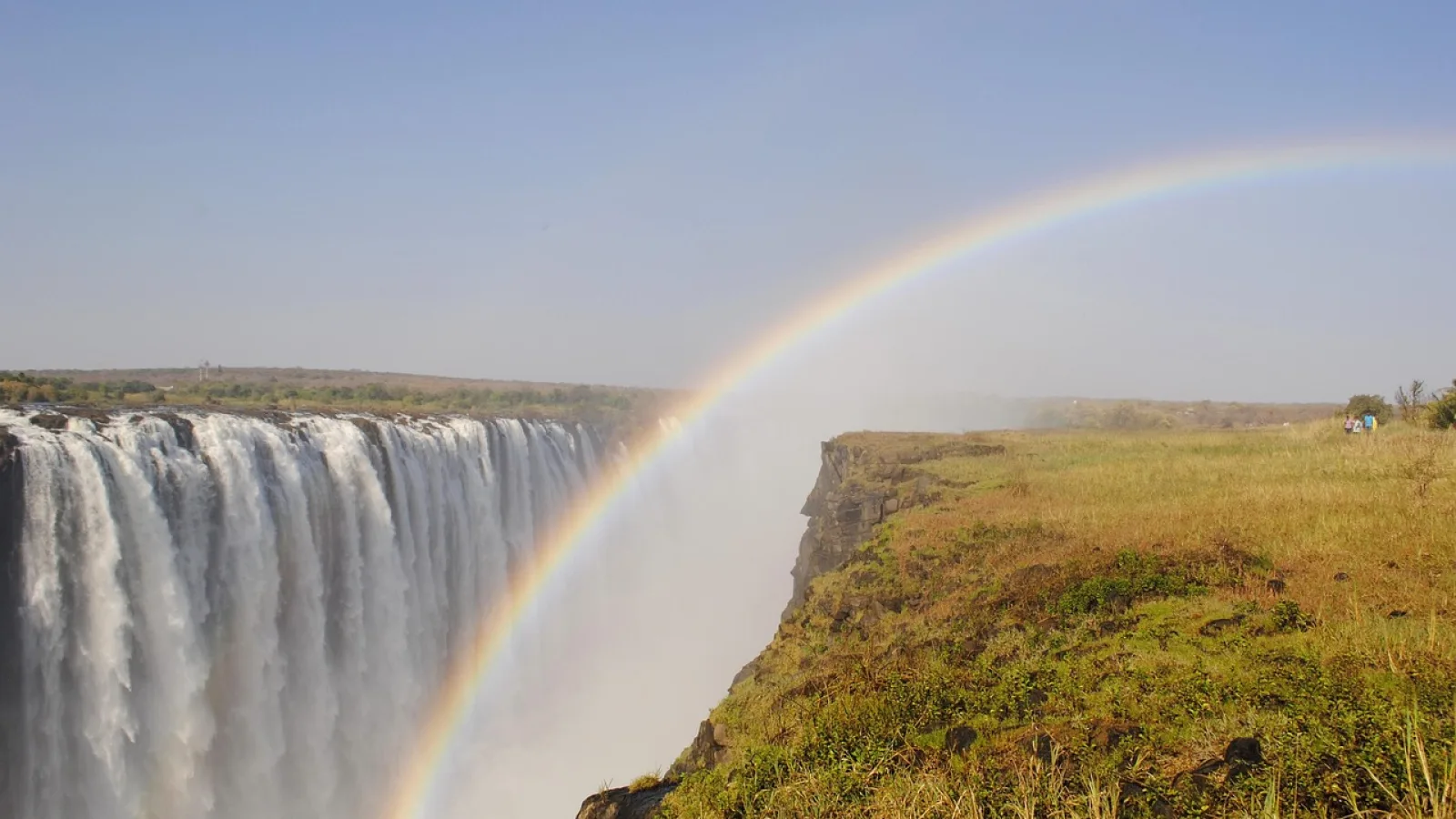
Visitors to Victoria Falls have the rare chance to see a phenomenon known as a moonbow – a lunar rainbow formed by moonlight refracting through the spray of the falls. This natural spectacle occurs only during specific conditions around the full Moon, offering a unique experience beyond the usual daylight view.
Victoria Falls spans the border between Zimbabwe and Zambia and is one of the largest waterfalls in the world. While it attracts approximately one million visitors annually, most attend during daylight hours. The moonbow viewing, however, is reserved for clear nights when the full Moon is bright enough to illuminate the dense mist rising from the cascade.
Sightings are limited to a few nights on either side of the full Moon each month and usually happen between February and July when water volume and spray are at their peak. Guides recommend securing tickets in advance for after-dark visits, as access to the falls at night is controlled and safety considerations apply when navigating wet, misty paths.
The lunar rainbow itself appears dimmer and less colourful than its daytime counterpart. This is because moonlight is much fainter than sunlight, resulting in a softer arc with subdued colours that can be difficult for the naked eye to discern. Photographers often use long-exposure settings to capture the hidden hues of red, blue, and violet within the moonbow.
Key practical advice for visitors includes wearing non-slip shoes and waterproof clothing due to the heavy mist around viewing points, as well as bringing warm layers for cooler night temperatures. Tour guides can also assist in safely moving between viewpoints as conditions shift.
The experience of waiting through the twilight for the moonbow to appear is part of the visit's allure. Once visible, it is a subtle but striking reminder of the falls’ power and the unique interaction between nature and lunar light.
Victoria Falls remains one of the few places on Earth where this rare natural event can be observed regularly, though the window remains narrow and weather dependent. For travellers seeking to witness the moonbow, planning visits around the full Moon and peak water months increases the likelihood of a successful sighting.
As the moonbow fades with the rising moon or shifting mist, visitors leave with the impression of having witnessed a moment both fragile and extraordinary – a spectacle firmly rooted in the natural rhythms of Victoria Falls.